Thursday, November 09, 2006

Haystack Rock

On a visit to the northern Oregon Coast in the summer of 2005, I took this picture of Haystack Rock, a 235-foot tall rock outcropping in the Pacific Ocean, the third-tallest structure of its kind in the world. This fall when my company advertised an employee photography competition, I submitted my photo and the caption below to the Landscape/Cityscape category.

Photo by Linda Mason Hood
World without end, Amen. Thoughts inspired by Haystack Rock on the Pacific Northwest coast of Oregon, USA

The competition results were announced last week. Over 800 photos were submitted, and my picture was not among the winners. The winners from each category were pretty amazing. I'll be sharing them in the next few blog posts. Enjoy!


© 2006, Linda Mason Hood
Truffles, Turtles & Tunes Copyright Statement

Wednesday, November 01, 2006

Happy Halloween

Photo by Kiyoshi Ota

A dog in a Halloween costume takes part in a parade in Tokyo's Harajuku Omotesando district October 29, 2006. Are we having fun yet?


© 2006, Linda Mason Hood
Truffles, Turtles & Tunes Copyright Statement

Sunday, October 22, 2006

Hiking on Mount Hood

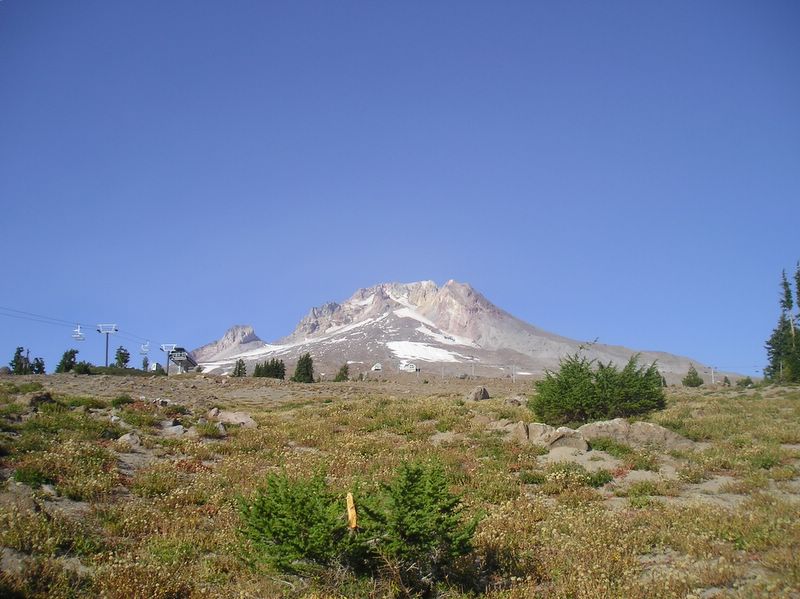
A few weeks ago my husband and I went to Oregon to visit our son who attends college in Portland. All three of us took a day hike on Mount Hood - our mountain. A pleasant 45-mile drive east-southeast from Portland, the majestic Mount Hood is the tallest mountain in Oregon and the fourth highest peak in the Cascade Mountain Range which runs north to south from British Columbia through Washington and Oregon ending in Northern California.

First some stats and history: Mount Hood is 11,237 feet tall (or 3,426 meters if you prefer). It is a stratovolcano -- that is, a volcano composed of explosively erupted cinders and ash with occasional lava flows. Mount Hood's main cone is about 500,000 years old. Regarding its volcanic history, it has had only four eruptive periods in the last 15,000 years. The most "recent" of those was 250-180 years ago. Though its eruptions have been few and far between, future volcanic activity is not outside the realm of possibility and would endanger the communities on its flank.

We began our hike at the Timberline Lodge, a National Historic Landmark completed in 1938 as a WPA project during the Depression. It is a magnificent structure which speaks to the rugged elegance of the high peaks of the western United States. Poke around the Timberline Lodge website and you will see exactly what I mean.

We began our day riding the ski lift which originates just east of the lodge. This lift, according to Alpenglow Ski History, was built in 1938 and was probably the second chairlift in America, following the one in Sun Valley which was built in 1936. The Mount Hood lift was named the Magic Mile because it originated above treeline and extended for nearly a mile. Fascinating details on its construction are described by Thomas P. Deering, Jr. in his 1986 Master's thesis entitled Mountain Architecture: An Alternative Design Proposal for the Wy'East Day Lodge, Mount Hood Oregon (Master of Architecture Thesis, University of Washington). The lift we took is actually the third incarnation of the Magic Mile chairlift. Like the original, it originates at 5,924 feet and took us up to the small buildings in the middle of the mountain slope, just beneath the glacier. (It's easier to see the buildings if you click on the picture to make it larger.) The elevation of those buildings is 7,015 feet.


At the higher elevation, the glaciers were accessible. My son hiked on the nearest glacier for a bit.


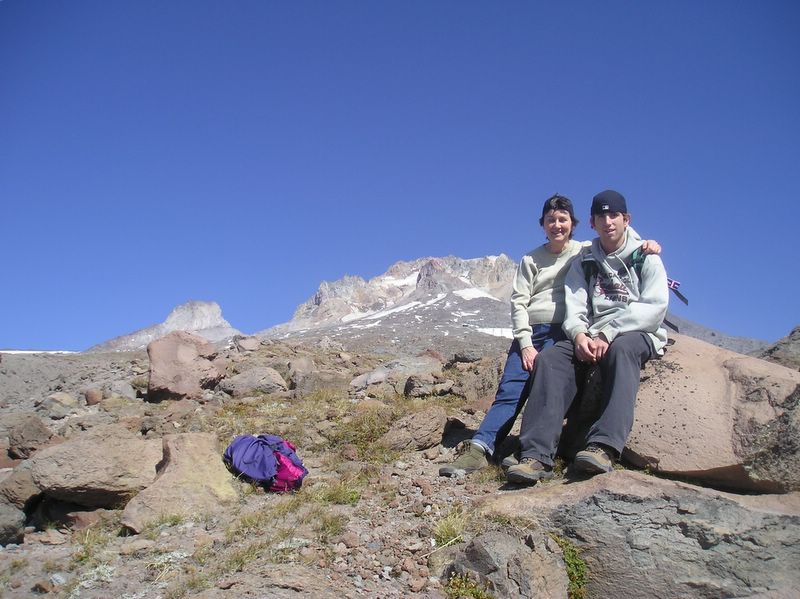
We all hiked upwards from the chairlift. Here is a picture of me and my son at about 7,600 feet with Mount Hood's peak still 4,000 feet above us.


Here is my husband looking at the view from the chairlift.


At about 6000 feet, we hiked the Timberline Trail through wooded areas . . .


and through two glacial canyons - the Sand and the Little Zigzag. Here are my husband and son on their way out of Little Zigzag Canyon. The camera angle makes this canyon looks enormous, but keep in mind its name.


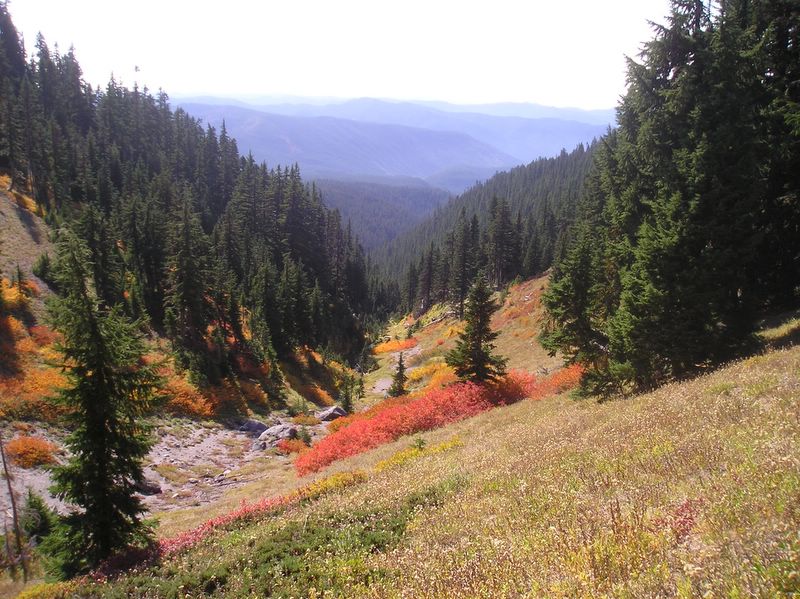
Next we went through an area where shrubs provided beautiful fall colors to contrast with the evergreens.


The enormous expanse of the (big) Zigzag Canyon with its 750 foot drop down to the Zigzag River was breathtaking. We lingered here for some time - soaking in the splendor, eating our apples and trail mix, and taking some pictures. Who could resist?


After the hike we returned tired and hungry to the Timberline Lodge and found ourselves some comfortable sofas with an exquisite mountain view in the Rams Head Bar. We ordered hearty sandwiches with mulled cider and Guinness and remained there gazing out at the snowy peak long after we finished our meal. My son drove us back to the motel where we all fell exhausted into bed, satisfied with our efforts and the time spent together.

(All the photos in this post are mine.)

© 2006, Linda Mason Hood
Truffles, Turtles & Tunes Copyright Statement

Saturday, October 14, 2006

Teacher Man


I just finished reading Teacher Man by Frank McCourt. The book recounts his experiences as a NYC highschool teacher of grammar, literature, and creative writing. McCourt is a grand Irish story teller. Frequently the tales he tells have to do with making an authentic connection with the students in his classroom. He seems to have tried to dig through the well constructed teenage facade to catch a glimpse of the individual person inside.

Sunday, October 08, 2006

Sunday: Itchenor

Before diving into my Itchenor post, let me apologize for how long it has taken me to blog my way through London. A 9-day trip has lasted nearly 11 weeks! I guess you might say I got carried away. You would also be correct in assuming that everyday life distracted me many times. Anyway, this posts concludes my London series. Thanks for your patience with my snail's pace. Researching the posts, I learned as much afterwards as I did when I was there. And now, down to business!

The last full day of my London trip was spent in Itchenor, a coastal town on the Chichester Harbor in West Sussex. The name Itchenor is Saxon in origin: Icca was the name of the Saxon chief who resettled the area after the collapse of Roman Britain around 400 AD. Ora is a Saxon word which means "a bank on the shore." Over the years shipbuilding and sailing activity have played a prominent role in the life of this town. The connection to the sea is evident in the naming of the little Norman church, built in 1175 AD, which was dedicated to St. Nicholas, the patron saint of seamen.

The St. Nicholas Church with its adjoining cemetery was the first place Maurene and I stopped on our Sunday morning walk. The vicar and a woman who tends to the church were setting up for the service. They showed us around and generously gave us some postcards and a pamphlet of historical information about the chapel.


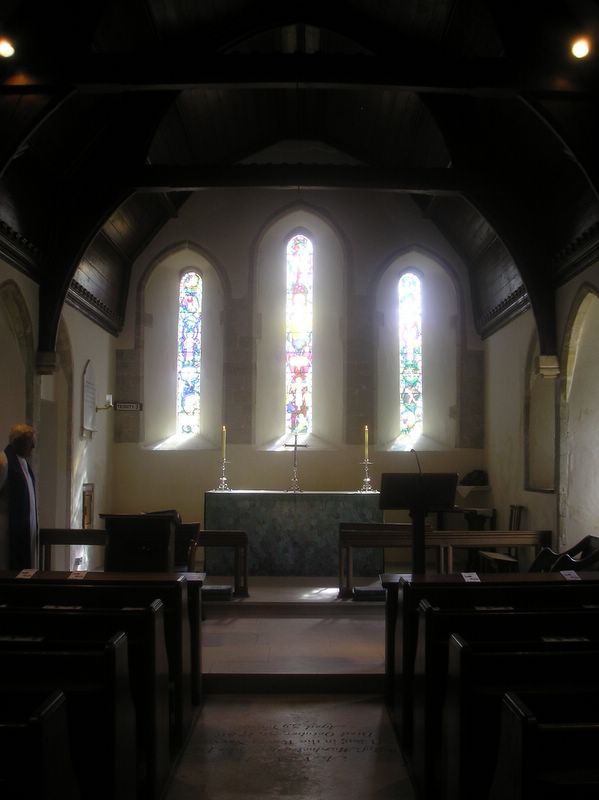
The church is quite small – a rectangular building 50 feet long and 16 feet 6 inches wide with no structural division between the nave (where the congregation sits) and the chancel (where the altar stands). Like most ancient buildings, the chapel has undergone many restorations and elements from many eras are visible. The oldest windows, pictured below, are from the 13th century. (Note the vicar, trying to disappear into the wall on the left there.)


The little chapel was very peaceful, lovely in its simplicity. I wish there had been time to stay for the service, but it was a beautiful day and we needed to keep to our schedule. As the St. Nicholas Church receded into the background, we communed with God and nature as we made our way down the road toward the Chichester Harbor.


Maurene took a shortcut down this walled path…


which opened up onto the majestic harbor view!!


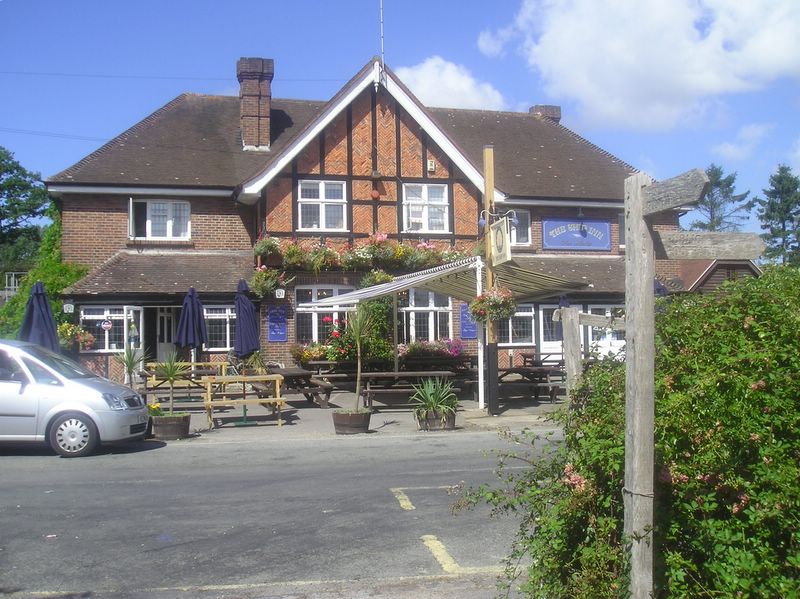
Just up from the marina sits the picturesque pub below, The Ship Inn. According to one internet site I read, it is the only pub in Itchenor.


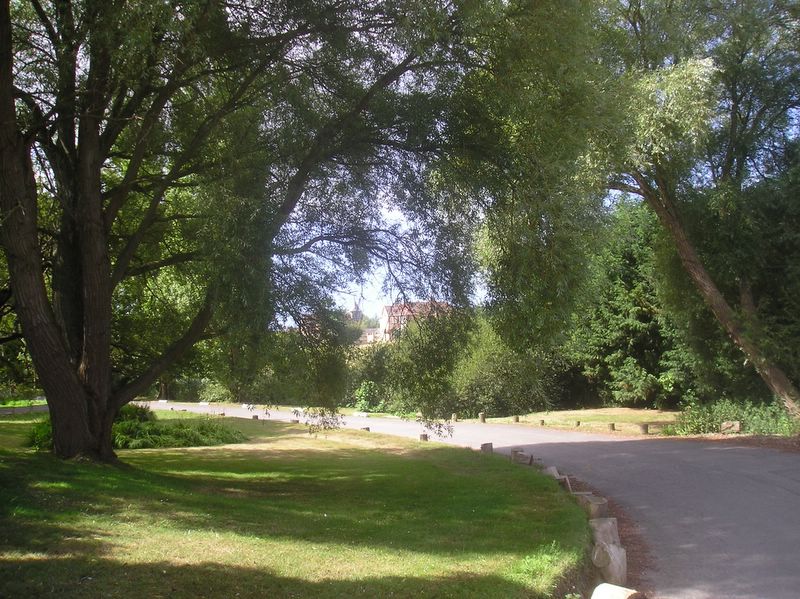
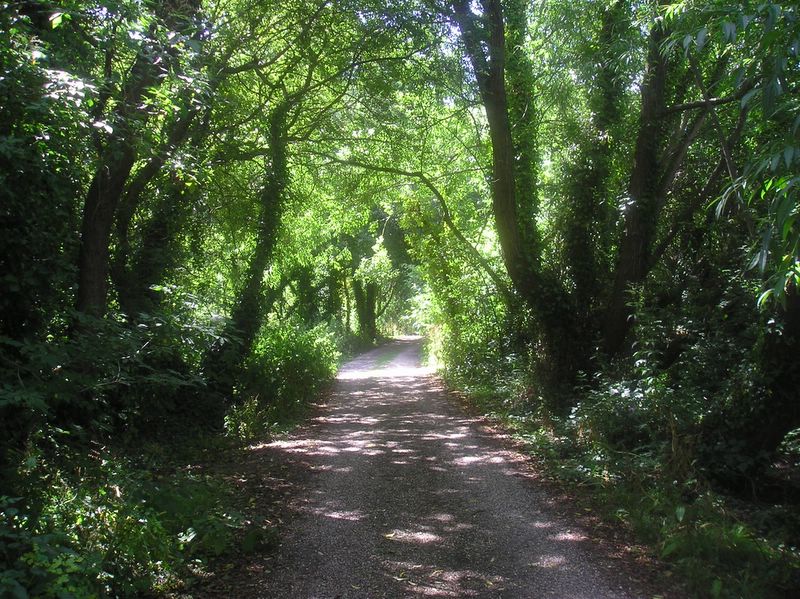
On our way back to our hostess’s house, we walked through a nature preserve.


Betty, our hostess, had a swimming pool, and after walking all morning Maurene and I were happy to join her for a dip in the pool. The mischievious Sindy did not join us.


Betty served us a nice lunch before we went back to the Chichester train station to catch the London train.

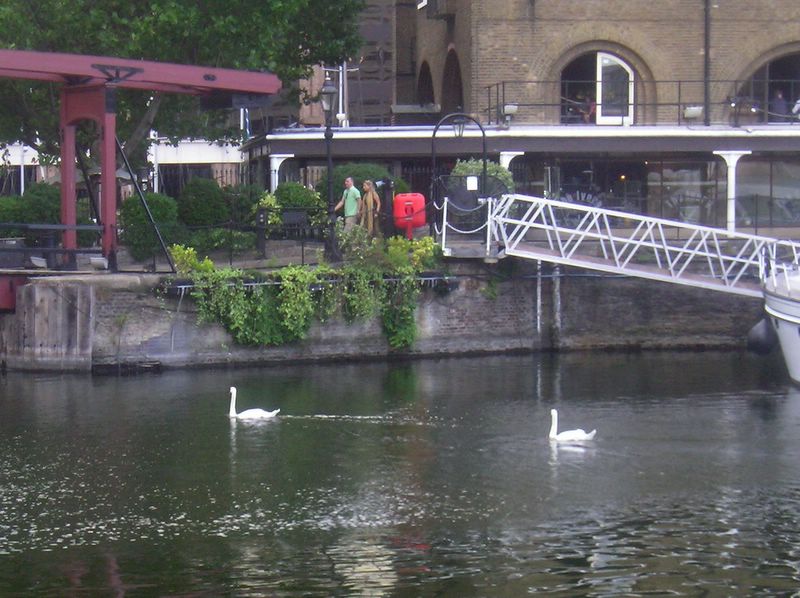
My last night was a nostalgic remembrance of the my first two nights in London. Maurene and I walked around the St. Katherine’s Dock area near the Dickens Inn and looked at the Queen’s swans.


Then we went to an Indian restaurant for dinner. I spent the night with Maurene and her Abyssinian cat named Peri.

The conclusion of my London blog series would not be complete without a special thank-you to Maurene. She waited patiently when I got lost on the tube and was late. She had cash on hand when my British currency ran out. (We settled up at the end of the week.) She gave good directions and suggestions and had boundless energy and enthusiasm. She suggested the weekend in Chichester. She was the perfect traveling companion. She made it possible for me to turn a business trip into a simultaneous vacation. So, thank you, Maurene. I hope someday we can have more travel adventures together – soon!

(P.S. All the photos in this post are mine.)

© 2006, Linda Mason Hood
Truffles, Turtles & Tunes Copyright Statement

Wednesday, September 20, 2006

Saturday, part II: Chichester Cathedral

The problem with descriptions of cathedrals is that writers assume readers understand not only the terminology designating the areas within the building but also the organizational role of the cathedral within the religious group. Descriptions loaded with special terms and insider jargon leave most of us with no better understanding than we had before we read them. Using myself as an example, I’ve attended Christian churches all my life -- even spent a good 20 years as an Episcopalian. I mention that because Episcopals have cathedrals, whereas Mennonites don’t. I have also visited and toured a fair number of cathedrals in various parts of the world. However, when reading about the Chichester Cathedral I found myself woefully unclear regarding many references and their implications. For this blog post, I made myself look up and clarify all my fuzzy understandings, and I’ve included definitions and explanations for all the terms I found necessary and meaningful to use here. I hope this helps you as much as it has helped me!

To appreciate the early history of the Chichester Cathedral, you need to understand that a cathedral is more than just a great big church. A cathedral is the bishop’s church and, as my son would once have said, the bishop is the boss of all the churches of the region (i.e., diocese) and their respective priests. Note the hierarchy: priests run churches; bishops run cathedrals. The town in which the cathedral is located is called the see, meaning the official seat or center of authority of a bishop. Considering all that, it's easy to see why the cathedral is usually the biggest and grandest church of the diocese. This page on the organization of the Chichester Diocese explains very clearly the main “players” and their roles.

I read that the Chichester Cathedral’s history actually began in the village of Selsey, ten miles south of Chichester, on land given to Saint Wilfred in 681 AD. In 1066 AD the whole area was conquered by the Normans led by William the Conqueror. In 1075 the Normans moved the see to Chichester and began construction on a new cathedral in 1076. Histories of the Chichester Cathedral include references to its predecessor in Selsey because even though the Chichester building itself wasn’t begun until 1076, the functions served by that building remained the same as the functions of the Selsey building dating back to 681. In fact, there have been 101 bishops to rule over this particular diocese which extends throughout what is now defined as East and West Sussex, and only 76 of them have presided from the Chichester Cathedral. The point I’m making here is that this is obviously a very old building, but its history is even older.

Let’s turn our attention now to the building itself and the terms used to describe it. These terms are not words found in most people’s everyday vocabulary. Often a picture is the best explanation, so I scanned the floor plan found in a pamphlet I bought in the Cathedral bookstore, Chichester Cathedral Pitkin Guide. North is at the top, but the front of a cathedral generally faces East. Knowing that, the descriptions will be easier to follow.


The initial period of construction from 1076 through 1123 was responsible for the nave (central portion where people congregate), the transepts (the portion of the building that forms a cross with the nave and provides additional seats which face the center), and the quire (the center section where the choir sits and where the organ is located). The presbytery (area to the east of the quire) contains the altar.

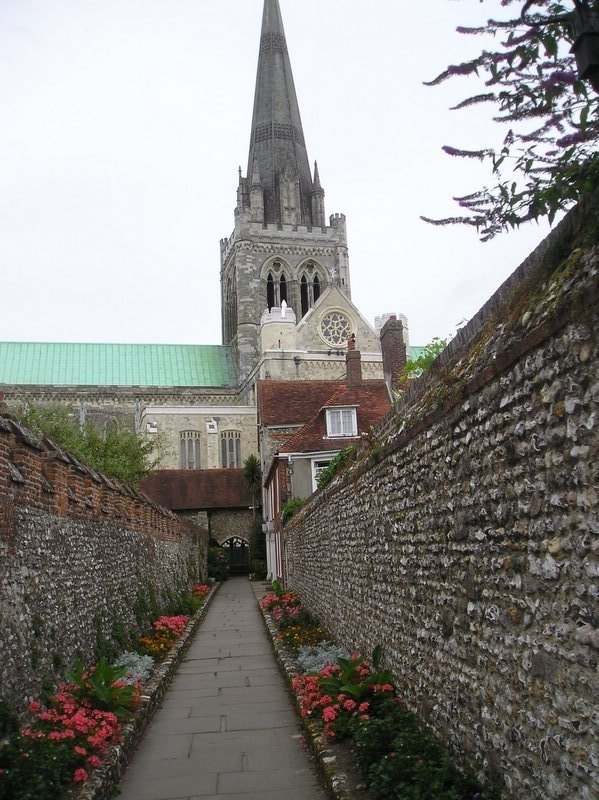
Actually, various parts of the cathedral were completed at different times over the years. The floor plan outlines the original early 12th century section in purple, later 12th and 13th century additions in red and green, and 14th through 16th century additions in pink and orange. My picture of St. Richard’s Walk below, taken from the south side of the Cathedral, captures construction from several of these periods. You can see the 13th century walls which lead to the 12th century building whose spire was rebuilt in the 19th century.


The marvelous arched ceiling inside the Cathedral was truly beautiful. I took this picture standing at the front of the nave looking back toward the main entrance.


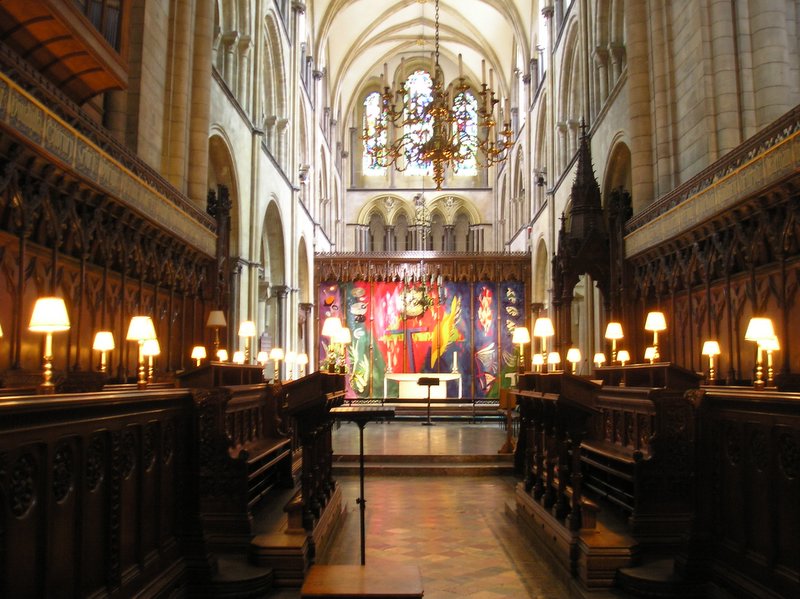
Turning around, I faced the quire and the presbytery behind it. You can see the stalls in the quire as well as the altar decorations in the presbytery. In small weekday services both the choir and the congregants sit in the stalls in the quire.


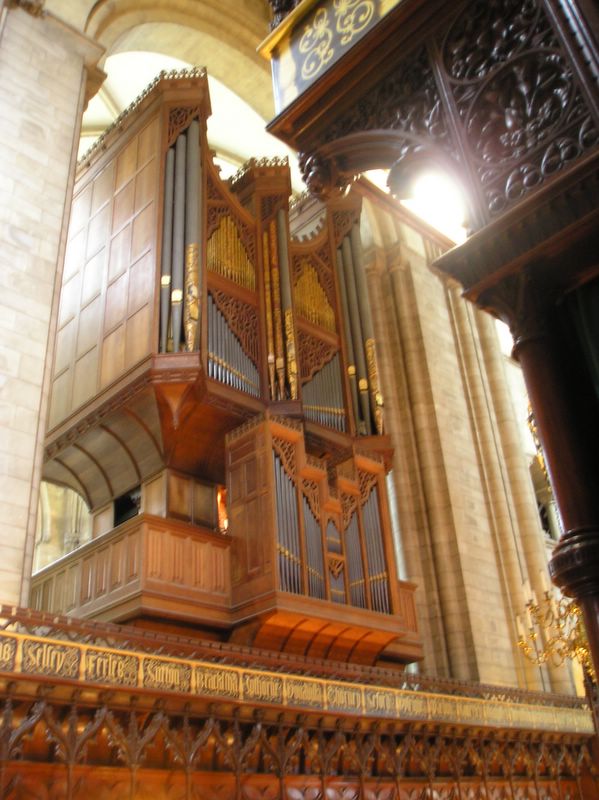
Above the quire stalls are the painted Renatus Harris organ pipes dating back to 1678, reports the Pitkin Guide. They were restored in 1986 after a silence of 13 years. I can tell you with certainty that their sound is as beautiful as their housing. Maurene and I sat beneath them in the quire stalls at the Choral Evensong service on the day of our visit.


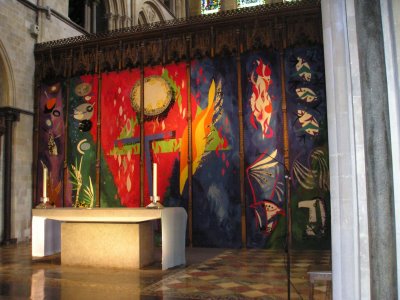
And here’s a close-up of the white marble altar by Robert Potter and the tapestry by John Piper (1966) which hangs on the screen behind the altar in the presbytery.


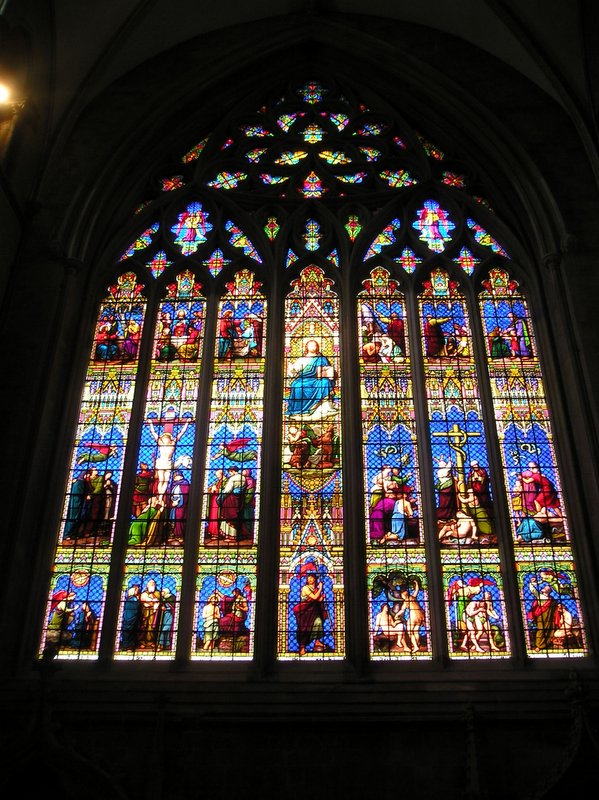
There’s not much ancient stained glass left in the Chichester Cathedral. Most of it comes from the 19th century. This window, located in the south transept, was designed by C. Parrish and made in 1877.


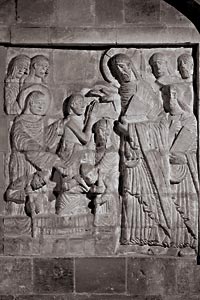
In the south quire aisle are two medieval sculptured stone panels dating back to 1125 AD. (This photograph was borrowed from the Chichester Cathedral website.)


Not far away a section of Roman tiled floor panels from the 2nd century can be seen beneath a plexiglass plate in the floor. These tiles were from the Roman city of Noviomagus, the predecessor of Chichester.


Going around in back of the presbytery and into the retroquire (area behind the presbytery, separated from it by the screen bearing the Piper tapestry above), we entered the Chapel of St. Mary Magdalene with its very modern décor. The striking 1960 painting below by Graham Sutherland entitled “Touch me not” dominates the area.


After looking around this chapel, Maurene and I lit a candle and took a seat to gaze at the painting for a while. An announcement, repeated periodically, reminded us that although the Cathedral housed many significant works of art, its purpose was primarily that of worship. Visitors were encouraged to pause in their explorations of the cathedral and meditate. A timely and appropriate message, since that’s exactly what we were doing!

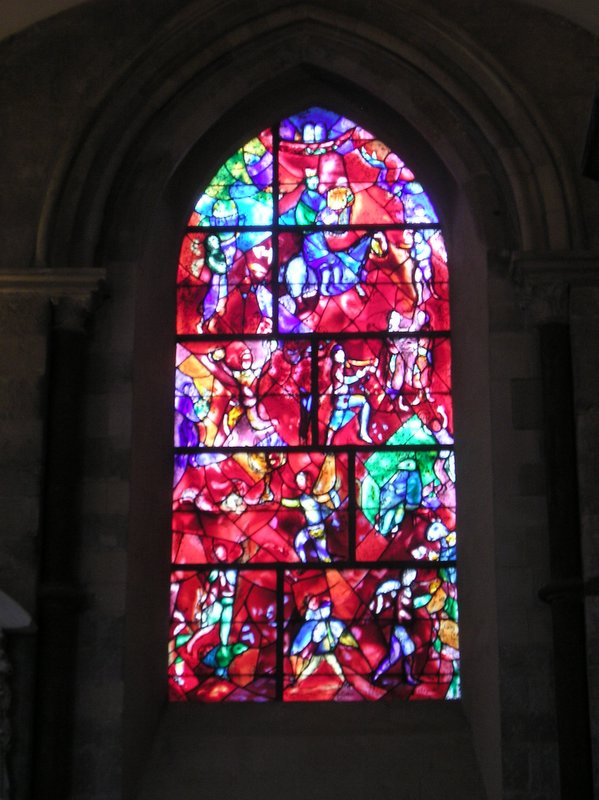
Also in the Chapel of St. Mary Magdalene is the small but stunning stained glass window designed in 1978 by Marc Chagall.


The 12th century chapel on the east side of the north transept contain the Treasury, a small museum of interesting artifacts. I read in the Pitkin Guide that “the Worshipful Company of Goldsmiths gave generous financial assistance to enable the cathedral to house and display securely its own treasures as well as plates from churches in the diocese.” Maurene and I enjoyed examining the medieval chalices and plates, bishops’ rings and the heads from bishops’ staffs, as well as some impressive medieval wooden chests.

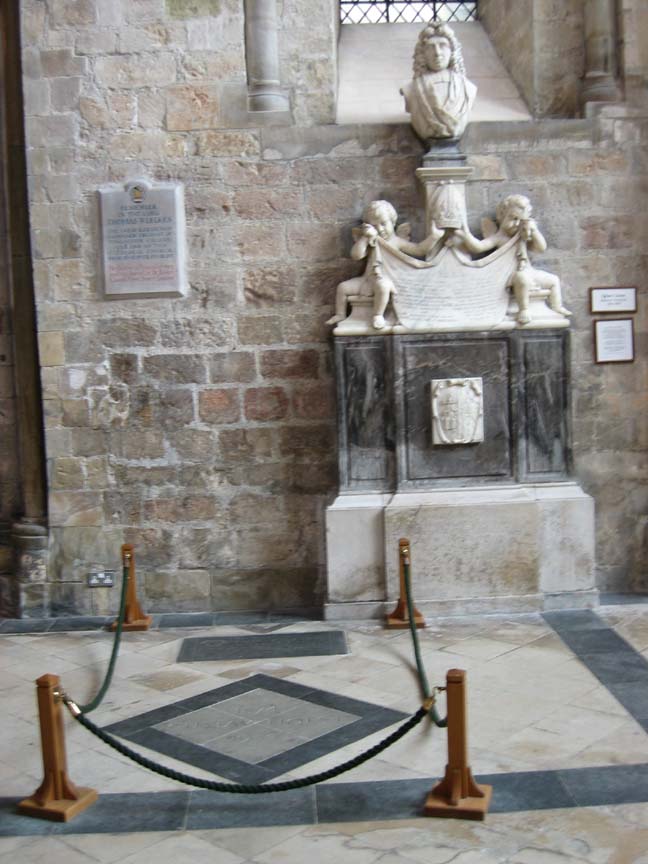
Chichester Cathedral has a strong musical heritage. Leonard Bernstein composed the Chichester Psalms in 1965 for the Cathedral. Gustav Holst also had connections to the Cathedral and is buried there. His ashes are entombed under the diamond-shaped plate in the floor in the picture below. Since I played quite a lot of Holst's music in high school, I can't believe I somehow forgot to take a picture of his tomb! But here's the one I found on the website I linked to his name.


Completing our tour of the Cathedral itself, Maurene and I purchased some gifts and souvenirs in the Cathedral Gift Shop before adjourning to the Cathedral Snack Bar for a "cream tea.” Maurene explained to me that a cream tea consists of scones served with (specifically) strawberry jam and clotted cream. The scones were not the dry, hard things I’ve had in NYC. They were fresh and moist. The strawberry jam was densely strawberry in flavor. Despite its name, the clotted cream was not disgusting and did not have hard lumps in it like cottage cheese. It was a heavily whipped cream which was not as sweet as we make it in the US – a perfect compliment to the jam. The whole concoction can only be described as “to die for.” I most definitely thought I had gone straight to heaven with the first bite!

After tea we wandered through some of the town's tourist shops. I was sorry to discover that there was nothing as tacky as a shot glass to be found in the classy little village of Chichester. My shot glass collection would just have to make room for a small china thimble bearing a handpainted depiction of the Cathedral. That was as close as I could come.

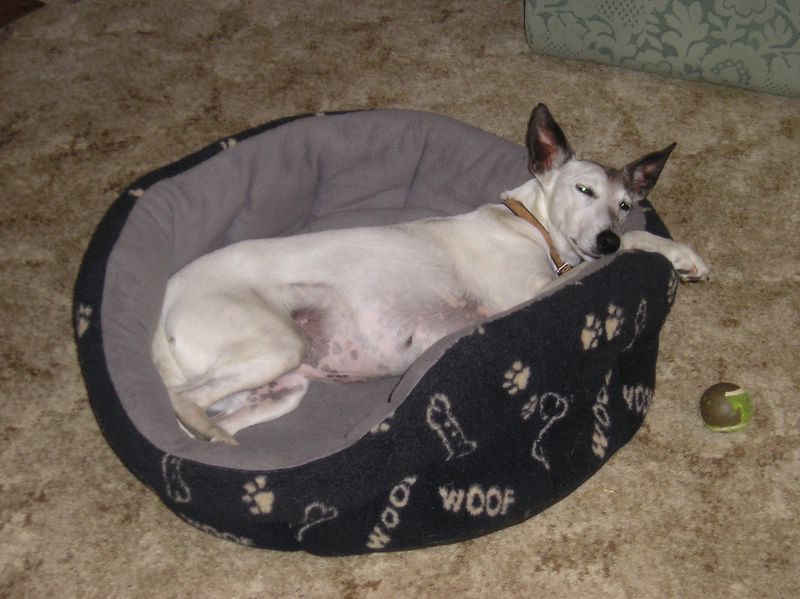
At around 6:30 pm John, Betty’s driver, took us out to Betty’s house in Itchenor, a village on the Chichester Harbor about 20 minutes drive from the walled city of Chichester. After a walk around Betty’s extensive garden which includes an orchard and a grape arbor as well as flower beds and large fruit and vegetable patches, we enjoyed an informal cold supper with Betty and Sindy, her mischievious shelter rescue dog. Betty theorizes that Sindy’s clever food heists are signs of an earlier life deprived of adequate food. Whatever the reason, Sindy demonstrated her stealth and daring by stealing Betty’s prawns and some crisps (potato chips) when she thought nobody was looking! And here is our Sindy, enjoying a lie-down with a stomach full of prawns. I dare say Maurene and I probably looked just as content when we climbed into our beds that night after good company, good food, and after a jam-packed day (no pun intended) of touring in Chichester.


(P.S. All the pictures in this post are mine, except where otherwise noted.)


Sunday, September 17, 2006

Betty's Birthday

Photo by Linda Mason Hood
Today is the birthday of the lady on the left. She is 90 years YOUNG today!

Happy Birthday, Betty!


© 2006, Linda Mason Hood
Truffles, Turtles & Tunes Copyright Statement

Monday, September 04, 2006

Saturday, part 1: Chichester Walls and Chichester Cross

Saturday, at last! With the work week behind me, I was excited about spending 100% of my time over the next two days vacationing with Maurene in West Sussex. I had never visited any part of the British countryside, so this would be a new adventure. Also, I hoped the weather by shore would be a little cooler than what we'd endured in London during the past week.

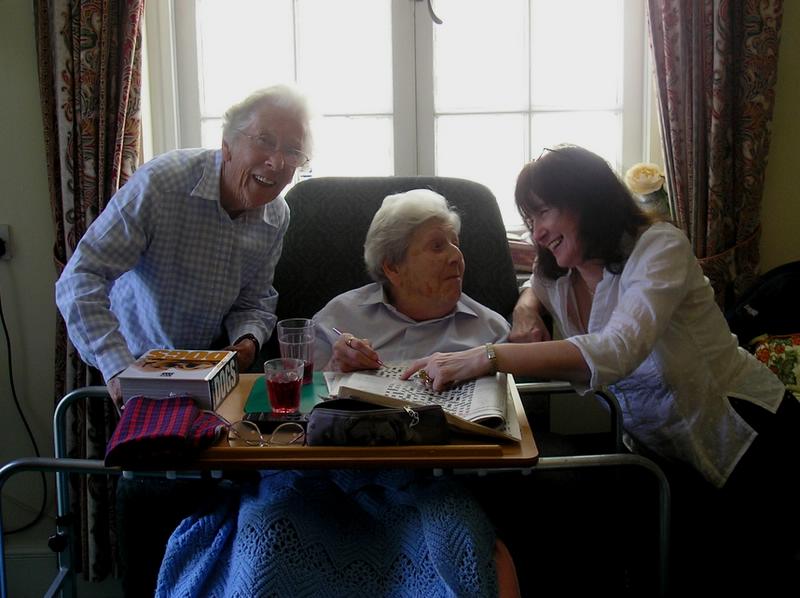
Maurene and I were to stay overnight with her 90-year-old friend Betty, who met us at the train station in Chichester. We were driven to the nursing home where Betty’s 95-year-old sister Nancy lives. After a short but very pleasant visit, Maurene and I set off to find lunch and fortify ourselves for a day of sightseeing in Chichester.


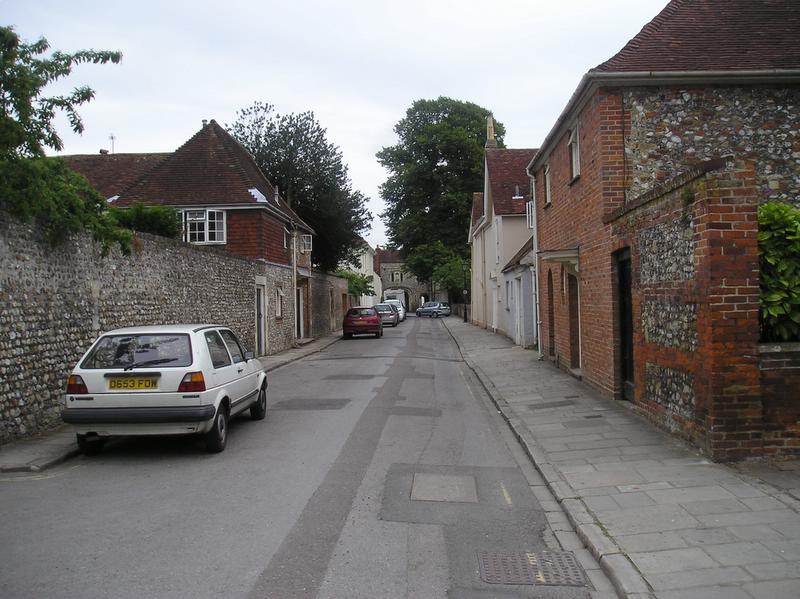
Driving into Chichester, our view of the city walls was the first evidence of its long history. The ancient city of Chichester was laid out in Roman times, possibly as early as the end of the second century. In 1204 AD repairs to the Roman wall were undertaken, with additional work performed in 1261 and in the 1370s. The medieval construction used “knapped flint.” Flint is apparently the local stone, and knapping was probably a rather manual process which involved cracking open the flint rock to expose the beautiful coloration inside. Standing in the middle of Canon Lane, which is just off South Street near the entrance to the cathedral close, I took this picture of the old city walls.


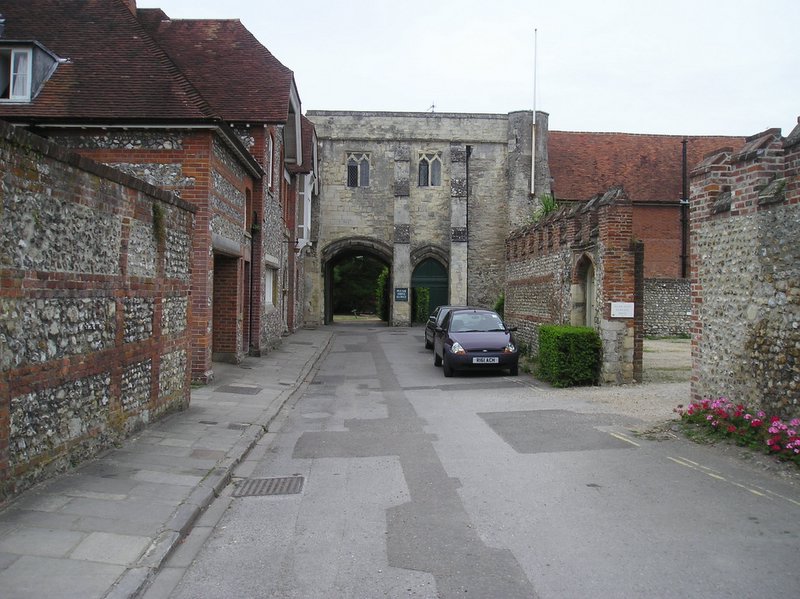
Turning around (still on Canon Lane), I saw the Canon Gate House which dates back to the 13th century.


This picture gives a closeup view of the surface of the walls. You can see not only the knapped flint but a spot where recent brick repair has been applied.


Maurene and I didn’t walk the perimeter of the walls (1.5 miles or 2.4 kilometers), but the internet provides a nice virtual walk which I highly recommend.

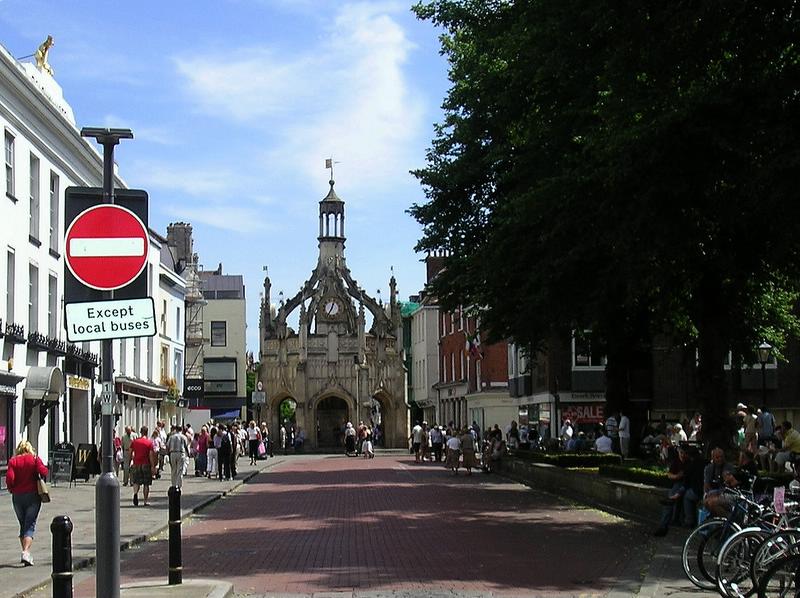
Chichester’s four main streets – simply named North, South, East, and West streets – all radiate out from a central “cross,” a structure given to the town in 1501 by the Bishop Storey to shelter farmers who sold produce in the city. Here’s my picture of the Chichester Cross.


In Roman times there was no Cross, of course, but these same four streets extended from the center of town in all four directions: North to London, East to Winchester and Silchester, South to the sea, and West to Fishbourne, which was the Roman supply base on Chichester Harbor.

What makes Chichester interesting, however, is not only the landmarks of Roman and medieval times but evidences of all the other eras in between. It has had a vibrant, continuous history with a consistently rich cultural heritage. In addition to being the center of the diocese and providing religious leadership to the region, Chichester has also offered music, theater, art, museums, libraries, societies for intellectual improvement (such as the 19th century Literary and Philosophical Society), and community dances. Personally, I think the Chichester Cross is a symbol of all that. This beautiful landmark, which is neither Roman nor medieval, stands in the center of town and symbolizes how artistic contributions of all the periods have added to the culture and beauty of the little town of Chichester. 


(P.S. All the photos in this post are mine.)
© 2006, Linda Mason Hood
Truffles, Turtles & Tunes Copyright Statement