Wednesday, September 20, 2006

Saturday, part II: Chichester Cathedral

The problem with descriptions of cathedrals is that writers assume readers understand not only the terminology designating the areas within the building but also the organizational role of the cathedral within the religious group. Descriptions loaded with special terms and insider jargon leave most of us with no better understanding than we had before we read them. Using myself as an example, I’ve attended Christian churches all my life -- even spent a good 20 years as an Episcopalian. I mention that because Episcopals have cathedrals, whereas Mennonites don’t. I have also visited and toured a fair number of cathedrals in various parts of the world. However, when reading about the Chichester Cathedral I found myself woefully unclear regarding many references and their implications. For this blog post, I made myself look up and clarify all my fuzzy understandings, and I’ve included definitions and explanations for all the terms I found necessary and meaningful to use here. I hope this helps you as much as it has helped me!

To appreciate the early history of the Chichester Cathedral, you need to understand that a cathedral is more than just a great big church. A cathedral is the bishop’s church and, as my son would once have said, the bishop is the boss of all the churches of the region (i.e., diocese) and their respective priests. Note the hierarchy: priests run churches; bishops run cathedrals. The town in which the cathedral is located is called the see, meaning the official seat or center of authority of a bishop. Considering all that, it's easy to see why the cathedral is usually the biggest and grandest church of the diocese. This page on the organization of the Chichester Diocese explains very clearly the main “players” and their roles.

I read that the Chichester Cathedral’s history actually began in the village of Selsey, ten miles south of Chichester, on land given to Saint Wilfred in 681 AD. In 1066 AD the whole area was conquered by the Normans led by William the Conqueror. In 1075 the Normans moved the see to Chichester and began construction on a new cathedral in 1076. Histories of the Chichester Cathedral include references to its predecessor in Selsey because even though the Chichester building itself wasn’t begun until 1076, the functions served by that building remained the same as the functions of the Selsey building dating back to 681. In fact, there have been 101 bishops to rule over this particular diocese which extends throughout what is now defined as East and West Sussex, and only 76 of them have presided from the Chichester Cathedral. The point I’m making here is that this is obviously a very old building, but its history is even older.

Let’s turn our attention now to the building itself and the terms used to describe it. These terms are not words found in most people’s everyday vocabulary. Often a picture is the best explanation, so I scanned the floor plan found in a pamphlet I bought in the Cathedral bookstore, Chichester Cathedral Pitkin Guide. North is at the top, but the front of a cathedral generally faces East. Knowing that, the descriptions will be easier to follow.


The initial period of construction from 1076 through 1123 was responsible for the nave (central portion where people congregate), the transepts (the portion of the building that forms a cross with the nave and provides additional seats which face the center), and the quire (the center section where the choir sits and where the organ is located). The presbytery (area to the east of the quire) contains the altar.

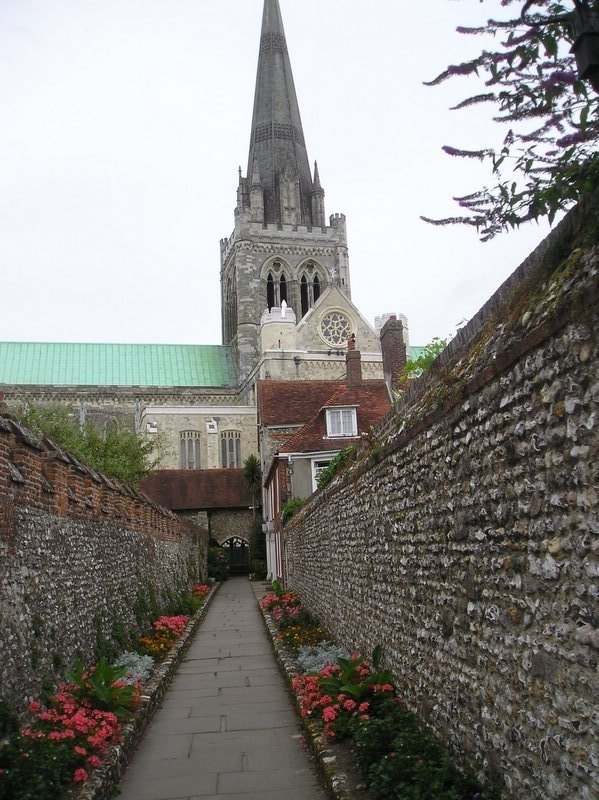
Actually, various parts of the cathedral were completed at different times over the years. The floor plan outlines the original early 12th century section in purple, later 12th and 13th century additions in red and green, and 14th through 16th century additions in pink and orange. My picture of St. Richard’s Walk below, taken from the south side of the Cathedral, captures construction from several of these periods. You can see the 13th century walls which lead to the 12th century building whose spire was rebuilt in the 19th century.


The marvelous arched ceiling inside the Cathedral was truly beautiful. I took this picture standing at the front of the nave looking back toward the main entrance.


Turning around, I faced the quire and the presbytery behind it. You can see the stalls in the quire as well as the altar decorations in the presbytery. In small weekday services both the choir and the congregants sit in the stalls in the quire.
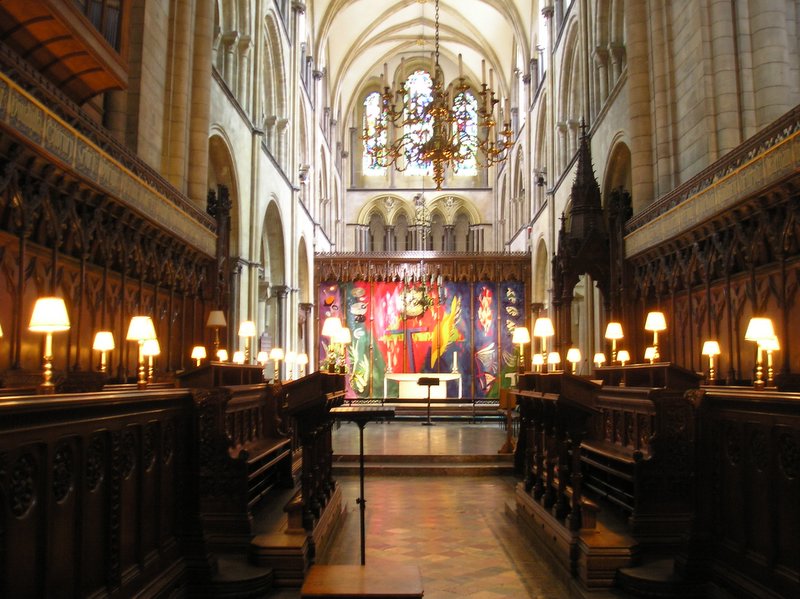


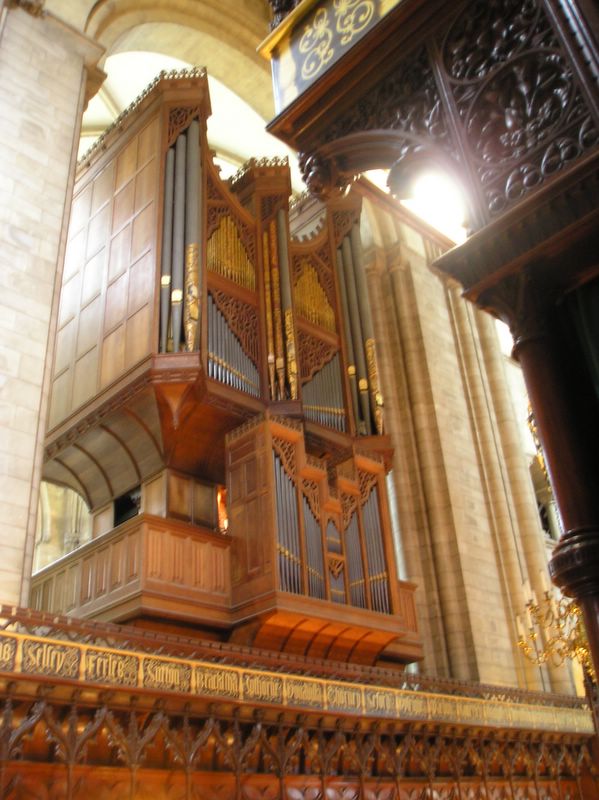
Above the quire stalls are the painted Renatus Harris organ pipes dating back to 1678, reports the Pitkin Guide. They were restored in 1986 after a silence of 13 years. I can tell you with certainty that their sound is as beautiful as their housing. Maurene and I sat beneath them in the quire stalls at the Choral Evensong service on the day of our visit.


And here’s a close-up of the white marble altar by Robert Potter and the tapestry by John Piper (1966) which hangs on the screen behind the altar in the presbytery.


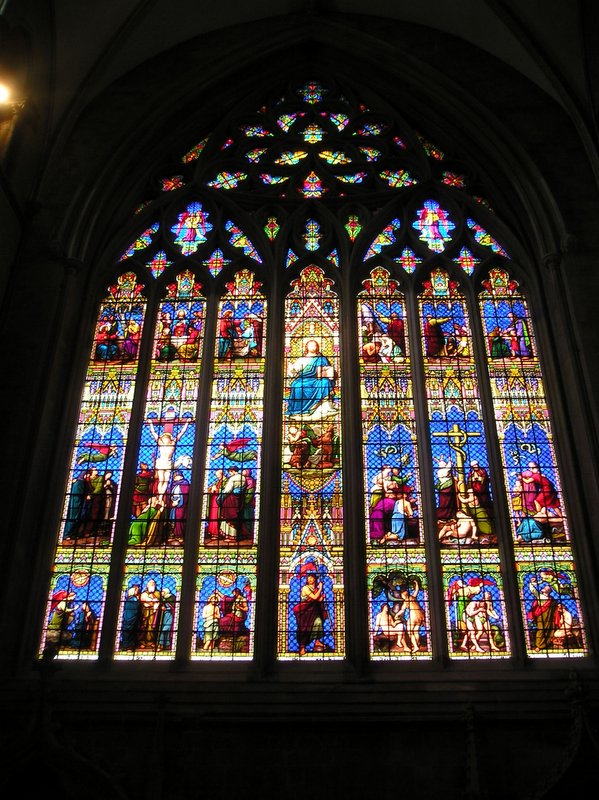
There’s not much ancient stained glass left in the Chichester Cathedral. Most of it comes from the 19th century. This window, located in the south transept, was designed by C. Parrish and made in 1877.


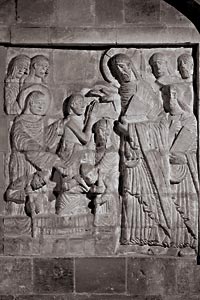
In the south quire aisle are two medieval sculptured stone panels dating back to 1125 AD. (This photograph was borrowed from the Chichester Cathedral website.)


Not far away a section of Roman tiled floor panels from the 2nd century can be seen beneath a plexiglass plate in the floor. These tiles were from the Roman city of Noviomagus, the predecessor of Chichester.


Going around in back of the presbytery and into the retroquire (area behind the presbytery, separated from it by the screen bearing the Piper tapestry above), we entered the Chapel of St. Mary Magdalene with its very modern décor. The striking 1960 painting below by Graham Sutherland entitled “Touch me not” dominates the area.


After looking around this chapel, Maurene and I lit a candle and took a seat to gaze at the painting for a while. An announcement, repeated periodically, reminded us that although the Cathedral housed many significant works of art, its purpose was primarily that of worship. Visitors were encouraged to pause in their explorations of the cathedral and meditate. A timely and appropriate message, since that’s exactly what we were doing!

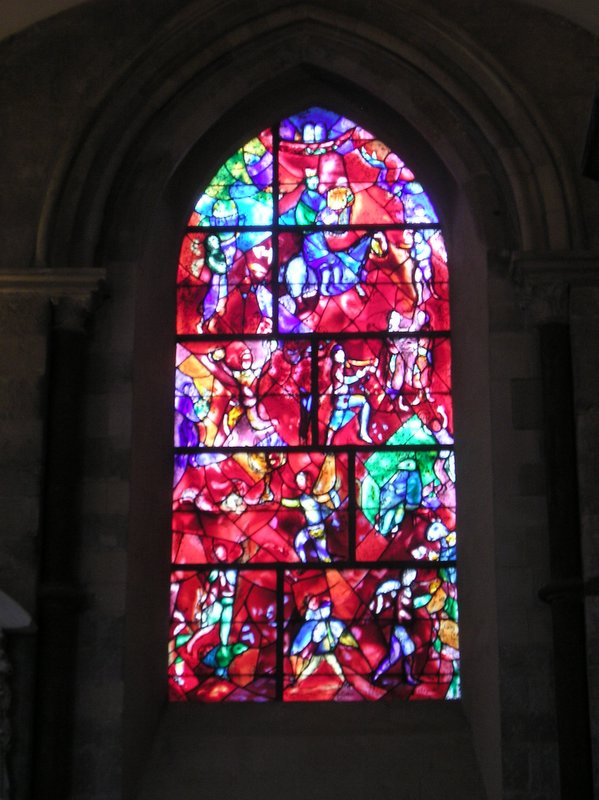
Also in the Chapel of St. Mary Magdalene is the small but stunning stained glass window designed in 1978 by Marc Chagall.


The 12th century chapel on the east side of the north transept contain the Treasury, a small museum of interesting artifacts. I read in the Pitkin Guide that “the Worshipful Company of Goldsmiths gave generous financial assistance to enable the cathedral to house and display securely its own treasures as well as plates from churches in the diocese.” Maurene and I enjoyed examining the medieval chalices and plates, bishops’ rings and the heads from bishops’ staffs, as well as some impressive medieval wooden chests.

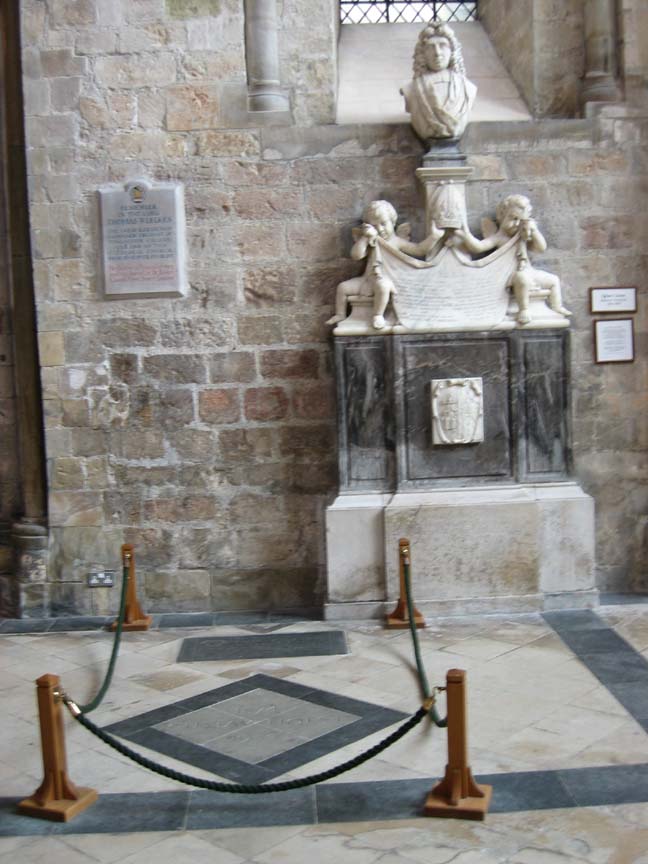
Chichester Cathedral has a strong musical heritage. Leonard Bernstein composed the Chichester Psalms in 1965 for the Cathedral. Gustav Holst also had connections to the Cathedral and is buried there. His ashes are entombed under the diamond-shaped plate in the floor in the picture below. Since I played quite a lot of Holst's music in high school, I can't believe I somehow forgot to take a picture of his tomb! But here's the one I found on the website I linked to his name.


Completing our tour of the Cathedral itself, Maurene and I purchased some gifts and souvenirs in the Cathedral Gift Shop before adjourning to the Cathedral Snack Bar for a "cream tea.” Maurene explained to me that a cream tea consists of scones served with (specifically) strawberry jam and clotted cream. The scones were not the dry, hard things I’ve had in NYC. They were fresh and moist. The strawberry jam was densely strawberry in flavor. Despite its name, the clotted cream was not disgusting and did not have hard lumps in it like cottage cheese. It was a heavily whipped cream which was not as sweet as we make it in the US – a perfect compliment to the jam. The whole concoction can only be described as “to die for.” I most definitely thought I had gone straight to heaven with the first bite!

After tea we wandered through some of the town's tourist shops. I was sorry to discover that there was nothing as tacky as a shot glass to be found in the classy little village of Chichester. My shot glass collection would just have to make room for a small china thimble bearing a handpainted depiction of the Cathedral. That was as close as I could come.

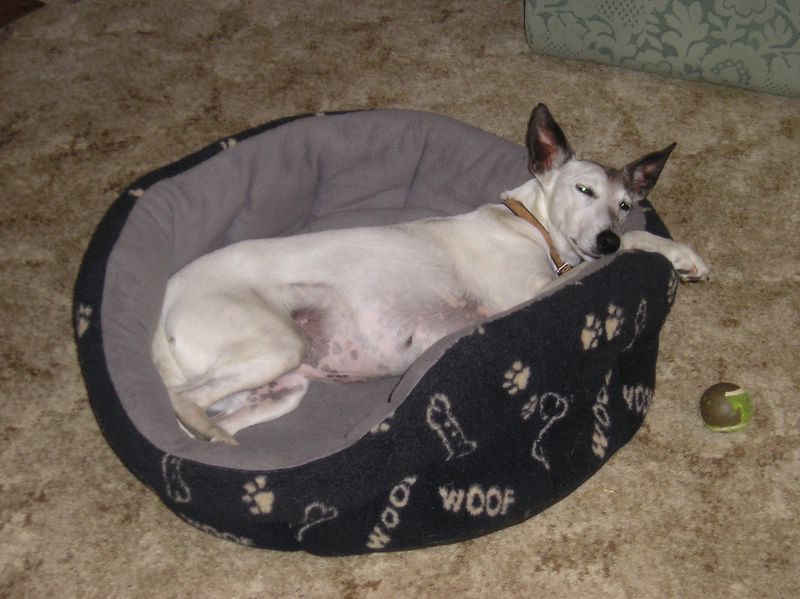
At around 6:30 pm John, Betty’s driver, took us out to Betty’s house in Itchenor, a village on the Chichester Harbor about 20 minutes drive from the walled city of Chichester. After a walk around Betty’s extensive garden which includes an orchard and a grape arbor as well as flower beds and large fruit and vegetable patches, we enjoyed an informal cold supper with Betty and Sindy, her mischievious shelter rescue dog. Betty theorizes that Sindy’s clever food heists are signs of an earlier life deprived of adequate food. Whatever the reason, Sindy demonstrated her stealth and daring by stealing Betty’s prawns and some crisps (potato chips) when she thought nobody was looking! And here is our Sindy, enjoying a lie-down with a stomach full of prawns. I dare say Maurene and I probably looked just as content when we climbed into our beds that night after good company, good food, and after a jam-packed day (no pun intended) of touring in Chichester.


(P.S. All the pictures in this post are mine, except where otherwise noted.)


Sunday, September 17, 2006

Betty's Birthday

Photo by Linda Mason Hood
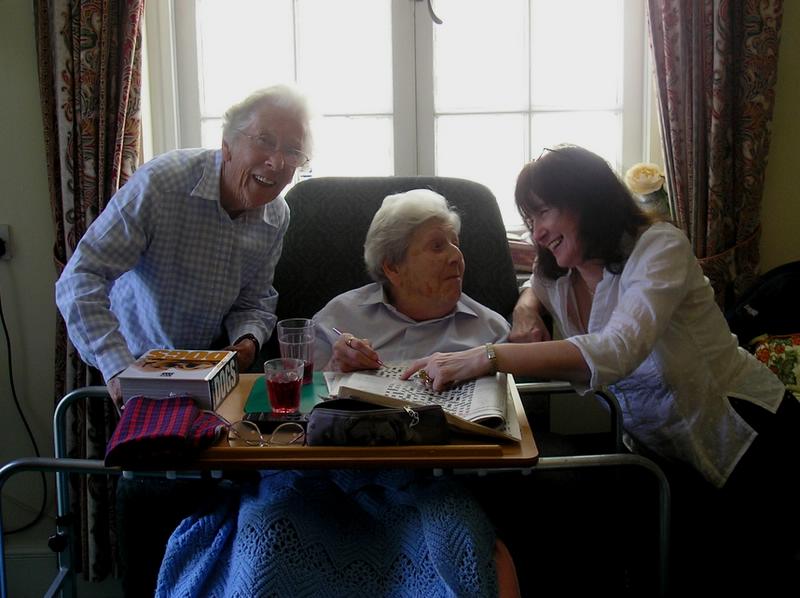
Today is the birthday of the lady on the left. She is 90 years YOUNG today!

Happy Birthday, Betty!


© 2006, Linda Mason Hood
Truffles, Turtles & Tunes Copyright Statement

Monday, September 04, 2006

Saturday, part 1: Chichester Walls and Chichester Cross

Saturday, at last! With the work week behind me, I was excited about spending 100% of my time over the next two days vacationing with Maurene in West Sussex. I had never visited any part of the British countryside, so this would be a new adventure. Also, I hoped the weather by shore would be a little cooler than what we'd endured in London during the past week.

Maurene and I were to stay overnight with her 90-year-old friend Betty, who met us at the train station in Chichester. We were driven to the nursing home where Betty’s 95-year-old sister Nancy lives. After a short but very pleasant visit, Maurene and I set off to find lunch and fortify ourselves for a day of sightseeing in Chichester.


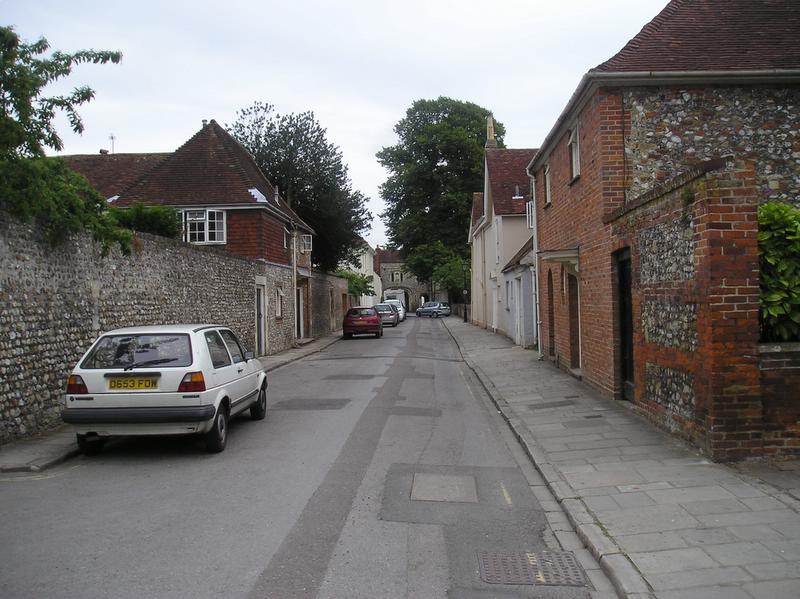
Driving into Chichester, our view of the city walls was the first evidence of its long history. The ancient city of Chichester was laid out in Roman times, possibly as early as the end of the second century. In 1204 AD repairs to the Roman wall were undertaken, with additional work performed in 1261 and in the 1370s. The medieval construction used “knapped flint.” Flint is apparently the local stone, and knapping was probably a rather manual process which involved cracking open the flint rock to expose the beautiful coloration inside. Standing in the middle of Canon Lane, which is just off South Street near the entrance to the cathedral close, I took this picture of the old city walls.


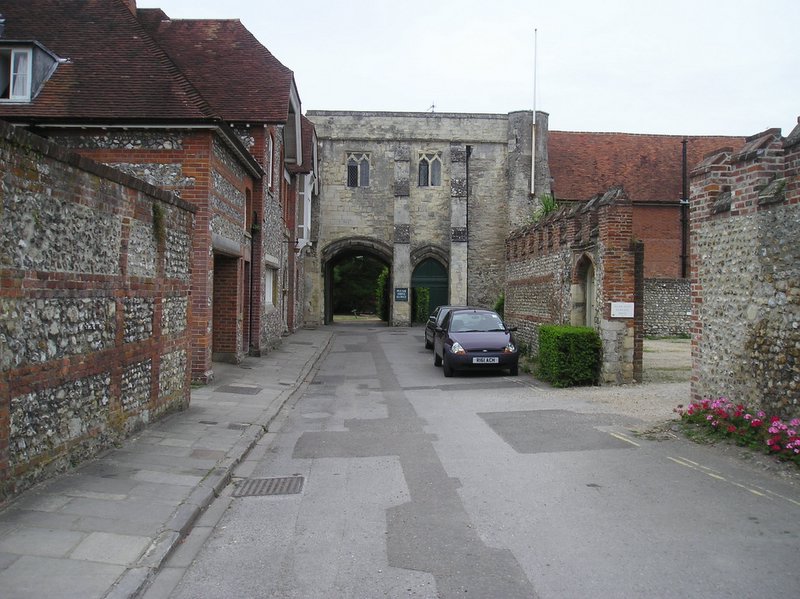
Turning around (still on Canon Lane), I saw the Canon Gate House which dates back to the 13th century.


This picture gives a closeup view of the surface of the walls. You can see not only the knapped flint but a spot where recent brick repair has been applied.


Maurene and I didn’t walk the perimeter of the walls (1.5 miles or 2.4 kilometers), but the internet provides a nice virtual walk which I highly recommend.

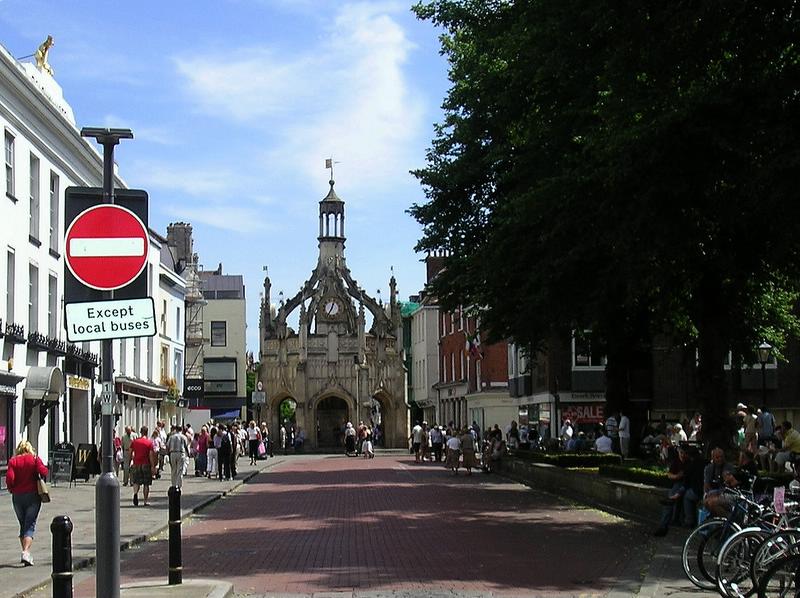
Chichester’s four main streets – simply named North, South, East, and West streets – all radiate out from a central “cross,” a structure given to the town in 1501 by the Bishop Storey to shelter farmers who sold produce in the city. Here’s my picture of the Chichester Cross.


In Roman times there was no Cross, of course, but these same four streets extended from the center of town in all four directions: North to London, East to Winchester and Silchester, South to the sea, and West to Fishbourne, which was the Roman supply base on Chichester Harbor.

What makes Chichester interesting, however, is not only the landmarks of Roman and medieval times but evidences of all the other eras in between. It has had a vibrant, continuous history with a consistently rich cultural heritage. In addition to being the center of the diocese and providing religious leadership to the region, Chichester has also offered music, theater, art, museums, libraries, societies for intellectual improvement (such as the 19th century Literary and Philosophical Society), and community dances. Personally, I think the Chichester Cross is a symbol of all that. This beautiful landmark, which is neither Roman nor medieval, stands in the center of town and symbolizes how artistic contributions of all the periods have added to the culture and beauty of the little town of Chichester. 


(P.S. All the photos in this post are mine.)

© 2006, Linda Mason Hood
Truffles, Turtles & Tunes Copyright Statement

Sunday, August 27, 2006

Friday: Pimms No. 1 and The London Symphony Orchestra


The picture above shows the view of Canary Wharf just outside the office, a popular gathering place with many lively pubs and restaurants. After work on Friday I was invited to join my London colleagues for an end-of-the-week beer at a pub called The Slug and Lettuce, just out of view on the right side of the picture, behind the trees. After socializing over a pint of Guinness, I went back up to the office to make a few phone calls to my New York colleagues who were all still hard at work due to the time difference. I finally called it a day around 8:40 pm (as you can see by the clocks in the picture).

I discovered the London Symphony Orchestra was doing an outdoor concert in Canada Square Park, just behind me as I snapped that picture. The concert was half over by this time, but I wandered over anyway. Even though I was tired, I couldn't resist hearing just a few pieces.

Intermission was in progress so I decided to get something to drink before the music started. The makeshift outdoor beverage stand offered only two (alcoholic) choices: Budweiser and Pimms. Well, I had not come all the way to London to order a Bud, so I ordered the Pimms. I thought it curious that the bartender put ice and fruit in the glass before she filled it from the tap. It looked like beer, but was it? The taste was... well... not at all like beer. Almost sweet. And one of the pieces of fruit was actually a cucumber! I drank a pint of the stuff and never did figure out what it was! Thanks to the internet, I can now tell you that Pimms No. 1, as it’s called, is a gin-based drink which consists of a slice of orange, lemon, apple, cucumber, and a sprig of mint -- all placed in a glass of two parts lemonade to one part Pimms. Apparently it’s as British as tea and is only drunk in the summer.

Canada Park was crowded, but I found a little place on the edge of the grass (on a curb, actually) where I could see the conductor on one of the big screens as well as the bandshell through the trees to my right. The "picturesque" crane in the background served as a reminder that Canary Wharf in the Docklands was an industrial area before it became London's ultra-modern version of Wall Street.


As soon as I settled in with my Pimms, the second half of the concert began. As if just for me, the London Symphony was performing a program of American music.


Now Bernstein, Barber, Gershwin, and Copeland are all serious American composers, and Richard Rodgers always makes good summer fare. But John Phillip Sousa??? What was he doing with that lot? But never mind. Sousa was last on the bill, and I planned to leave before then. I'm not very fond of Sousa, probably because I played Sousa marches ad nauseum in my high school marching band.

The concert was lovely, and it was nice to sit out in the cool summer air. As the program progressed and the orchestra launched into the first Sousa march, I got up to leave. However, the audience reaction to the music stopped me. The British obviously found these marches much more exciting than I did. People were clapping in rhythm and cheering at the chirping piccolos. I decided to stay and observe the crowd. Then I began hearing the marches through their ears, so to speak. It was an amazing experience. By the end the crowd couldn't stop applauding. They gave the orchestra a huge standing ovation and were rewarded with an encore.

I left before the encore ended. I needed to get back to the hotel and pack. Maurene and I had a big weekend ahead. In retrospect, though, I must say that I have a whole new appreciation for Sousa marches. They will always make me remember the enthusiasm of that Canary Wharf audience and wish for a Pimms No. 1.

(P.S. All the photos in this post are mine.)

© 2006, Linda Mason Hood
Truffles, Turtles & Tunes Copyright Statement

Sunday, August 20, 2006

Thursday: Theatre Royal Haymarket

I had been waiting with great anticipation for Thursday night because Maurene and I were to see Dame Judi Dench in Noel Coward’s Hay Fever. I am a HUGE Judi Dench fan, and I was very excited about seeing one of her live performances.
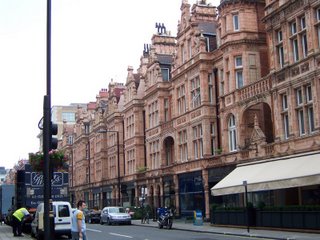
The night started off on a more positive note than yesterday's tourist adventures. I was relieved that the package I left in the Beatles Store had been found, and better yet, that Maurene had retrieved it for me on her lunch hour. After work, we met at her office, pictured below, which is located in a beautiful area known for its Victorian architecture.

Photo by Maurene Miller


From there, we walked to the Theatre Royal Haymarket. Although it is one of the oldest theatres in London (built in 1720), it was renovated in the 1990’s and air conditioning was installed. Another good omen. We were both thankful that we wouldn’t have to sweat through a performance as hot as yesterday's Prom concert at the Royal Albert Hall.

Like last night, there was not quite enough time to eat so we settled for a nice glass of wine before the first act. After ordering our intermission refreshments and purchasing programs, we headed for our seats.

Here is perhaps a good time to note two distinct differences between conventions at cultural events in London and in NYC. The first difference is that snack bars allow you to place your order and pay in advance for intermission refreshments. While the first act is in progress, your order is set out on a counter in the snack bar area. At intermission, you simply look for your name card and start sipping and munching. Quite civilized, wouldn't you say? The second difference is that theatres and concert halls charge for programs. The programs are much nicer than the free ones we get here in NYC. The British programs contain many glossy photos on beautifully laid out pages with lovely artwork as well as extensive background notes. However, you have to pay. We paid 4 pounds per program at the Royal Albert Hall and 5 pounds each at the Hay Market Theatre. One pound sterling equaled $1.85 USD at the time of my visit, so those programs were not exactly cheap!

Getting back to the play, though, it was a jewel. Just BRILLIANT. It seemed to take Judi a little while to warm up her voice, but we can all forgive her that. She is 70, after all. She projected great energy throughout, and her comic timing is that of a consummate pro. It was a treat as well to see Peter Bowles (from the British comedy series To the Manor Born) who played opposite Judi Dench. Actually, the entire ensemble of eight actors were equally talented, which is what made the play such a delight to watch. I felt Noel Coward’s drama, set in 1925, held up well. (The Times review of April 22, 2006 agrees.) Being in London for the week intensified my awareness of the play's nuances as Noel Coward poked fun at the British upper class. However, the intrigue of family relationships holds the same fascination today for audences everywhere.

Afterwards, Maurene and I went across the street for a proper dinner in an Italian restaurant. The food was very good, and we were both in fine spirits. It is not often that one can experience such a wonderful performance of a well crafted piece of writing followed by good food and wine, all enjoyed with a friend you don’t see very often. Indeed, it was a very special night. Definitely the high point in my trip so far!


© 2006, Linda Mason Hood
Truffles, Turtles & Tunes Copyright Statement

Sunday, August 13, 2006

Wednesday: Beatles Store and Royal Albert Hall

Wednesday I left work at 5:30 pm and dashed across London on the Tube, from the Canary Wharf stop on the far east side to the Baker Street stop on the west side. I was determined to get to the Beatles Store before it closed at 6:30 pm. Remembering this store from our family trip to London in 2000, my son had requested a Beatles calendar and a Zippo lighter with a Beatles logo.


photo taken from the Beatles store website


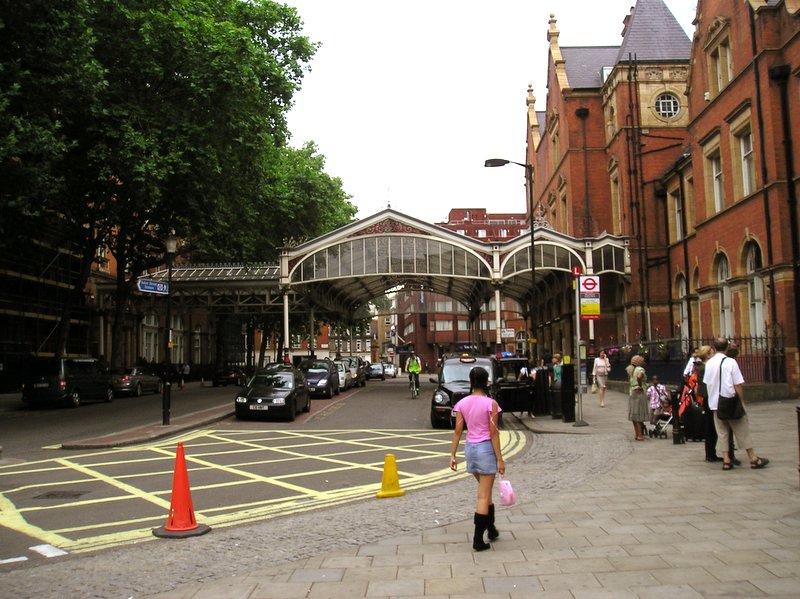
After making my purchases (I paid an outrageous USD $60 for the lighter), I took a walk around the neighborhood. The little B&B where we had stayed in 2000 still looked good, as did the pub where we ate several times. At the Marylebone Station (seen in the Beatles’ movie “A Hard Day’s Night”) I realized I had left the Zippo & calendar in the Beatles store. ARGH! I ran back, but it was locked up tight. Upset though I was, I had to put it out of my mind for the evening. I would call them in the morning.


Photo by Linda Mason Hood

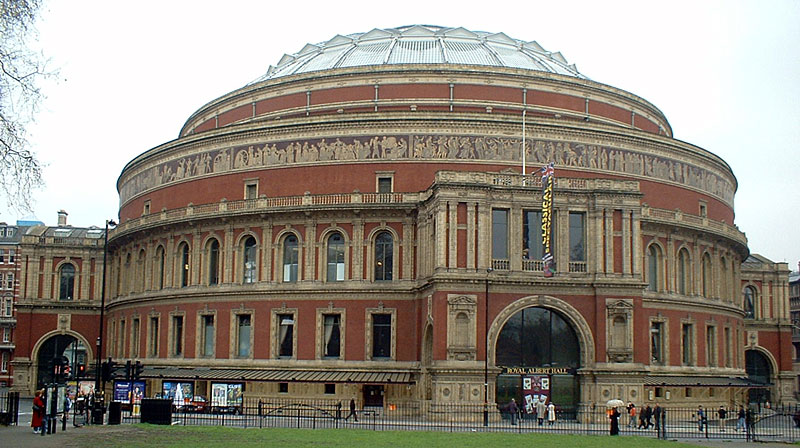
Next on the agenda: Royal Albert Hall. Before leaving NY, I had purchased tickets for Maurene and I to hear a concert in the annual summer Promenade series. Since we had no time for dinner, we went to the little snack bar inside the Hall. The couple before us got the last sandwich, so we made do with a glass of wine and a small container of ice cream each, plus a large cookie and a package of nuts which we shared.


Permission to copy granted under GNU Free Documentation License

It was REALLY hot in the Royal Albert Hall. We sat very still, but even so, the sweat poured off us as though we were under a shower. Nevertheless, the concert was brilliant. The program of Prom #17 was entitled The Great Venetians and included music of Gabrielli, Monteverdi, Grandi, Rigatti, and Cavalli. We heard the Monteverdi Choir and the English Baroque Soloists as well as an instrumental group called His Majesty’s Sagbutts and Cornetts, both conducted by Sir John Eliot Gardiner. This review from the Sunday Telegraph conveys the magic of the music we heard.


Photo by Linda Mason Hood

The concert, which didn’t start until 10:15 pm, ran past midnight. Rather than make a mad dash for the last train, Maurene and I opted for a cab. After the anxiety of the lost lighter, the lack of dinner, and the heat of the Hall, riding in that spacious black cab and seeing London's night-time sparkle was a real treat.

I arrived back at the hotel around 1 am and didn’t fall asleep for an hour. Still jet lagged, I guess, because 2 am is only 9 pm in York. I went to bed with a cup of peppermint tea and a biscuit and read a bit more of the program notes. It seemed the perfect way to wind down from my Wednesday night after-work adventure.


© 2006, Linda Mason Hood
Truffles, Turtles & Tunes Copyright Statement

Tuesday, August 08, 2006

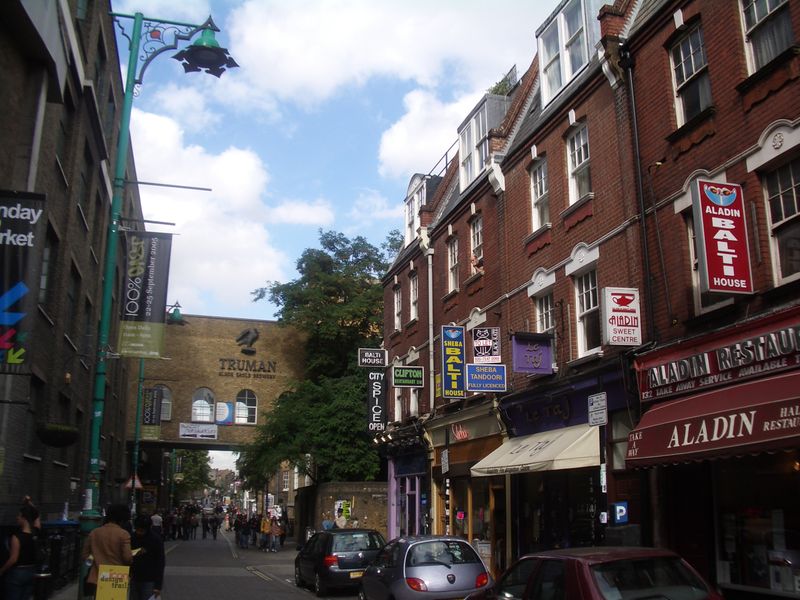
Tuesday: Brick Lane

This photo was taken by Justin Cormack and is licensed under under Creative Commons Attribution ShareAlike 2.0 License


After sleeping off my jet lag on Monday night, I awoke on Tuesday with renewed determination to see something of London besides the office and the hotel. My London friend Maurene suggested we go to Brick Lane, also called Banglatown, and eat Indian Food. Before dinner we walked the entire length of Brick Lane checking out restaurants. Just like on Sixth Street in Manhattan, young men stood outside the restaurants trying to entice customers. Over and over, we heard: "Want a nice curry, ladies?" Finally we settled on a place of our own choosing, not being persuaded by any of the restaurant hawkers’ sales pitches. We had a lovely meal, some good Indian beer, and a very nice time.


© 2006, Linda Mason Hood
Truffles, Turtles & Tunes Copyright Statement

Saturday, August 05, 2006

Struggles with Jet Lag

I’m not very experienced with jet lag. I expected the flight from New York to London, across five time zones, to make me feel awake or tired at the “wrong” times. I have learned, however, that jet lag can manifest itself in a variety of other ways.

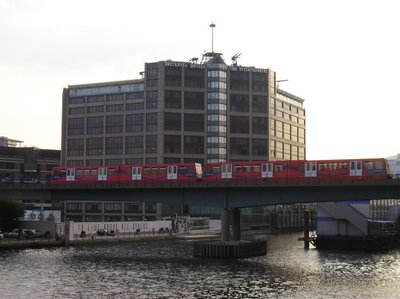
I arrived at the Britannia International Hotel on Sunday 7/23 at about 3 pm London time. In this picture you can see the Docklands Light Rail train (referred to as the DLR) which stops very near to the hotel.

(I took all these pictures, by the way.)


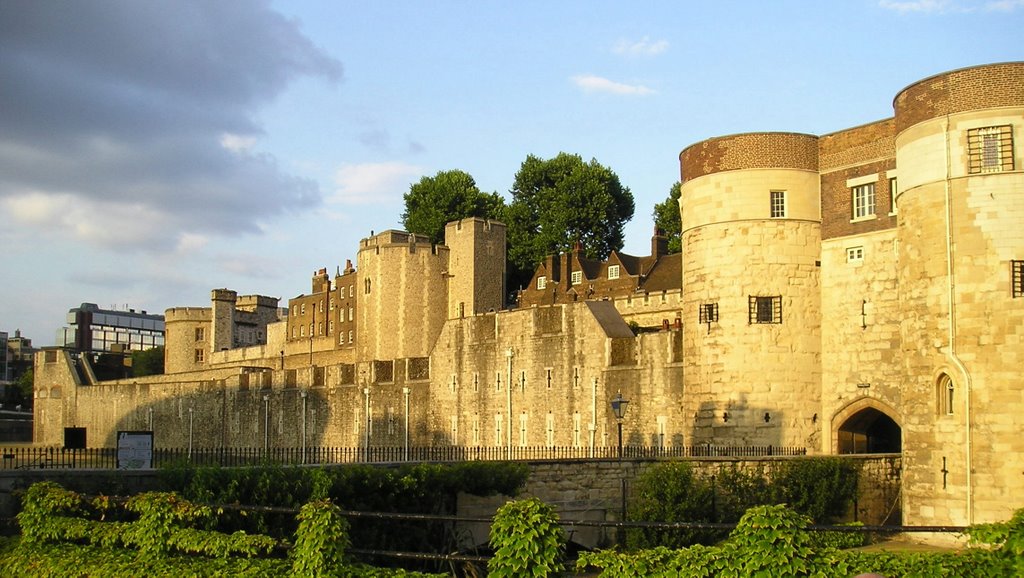
Since I had slept about five hours on the plane, I felt pretty good. I met my London friend Maurene near the Tower of London. Walking around its perimeter, I remembered what fun I had with my family when we visited London together in 2000.


Maurene and I walked along the Thames River. We were fortunate enough to see the Tower Bridge, a drawbridge, being raised. Very cool!


We had a beer on the porch of the Dickens Inn and then went up to the dining room for dinner.


It was after dinner (by now it was about 10 pm) when JET LAG STRUCK. For a split second I felt jolted – everything stopped abruptly just for an instant. Not wanting to sound like a drama queen, I said I was feeling a little tired. We finished up and I headed back to the hotel, a mere six stops on the DLR. At the fifth stop I was awake and alert. Also at the eighth stop. The stops in between don’t exist in my memory. Unlike when I doze on trains and buses in NYC, I wasn’t conscious of falling asleep or having been asleep. I literally blacked out.

Missing my stop was not a problem. I just went to the other side of the platform and backtracked on the DLR, being careful not to sit down or relax too much. That strategy got me back safe and sound.

On Monday, my first day in the London office, I kept noticing a set of clocks that show the time in five cities around the world -- NYC, London, Sydney, Singapore, and I forget the fifth. It disturbed me to see that it was 4:30 AM in New York when I went for my morning tea. As I went to the 11 AM meeting, I noticed it was 6 AM in New York. Looking at these clocks was becoming painful, and I vowed to keep away from them til afternoon.

About 12 people attended the 11 AM meeting. My role was to observe and learn more than to participate. Thank goodness, because about 30 minutes into the meeting I began experiencing some very strange things. First of all, my vision blurred. Thinking I might fall asleep, I drank my tea and moved about in my seat. No, I was awake enough. Just had blurred vision. I chalked it up to jet lag. As the meeting progressed, I found myself seeing all the participants as having only heads, no bodies. The heads were talking in rhythm. Suddenly I was aware that if I spoke, my flat American speech patterns would disturb the flow of the British English surrounding me. I imagined vowels and whole words colliding as the stress was placed on differently on syllables within the same word. I avoided speaking for a bit. This was trippy. Who knew what I might say! Then, as quickly as it descended upon me, it passed. My vision cleared and the talking heads became whole people again. I concluded this was one of the stranger manifestations of jet lag.

Around 3 pm I started feeling absolutely GREAT. I became an extrovert and enthusiastically participated in all conversations, asked good questions, and zipped through my email to the NY office. I realized it was 10 AM now in NYC – the time my brain starts to work on a normal workday. Hmmm. Jet lag again.

I did not go out on Monday night, choosing instead to get a bit more sleep so that my jet lag symptoms would subside. And it worked. Tuesday really was better. I had a recurrence of the blurry vision after lunch, but it didn’t last long and didn’t include the weirdness of the Monday meeting. The sleep helped, yes, but equally important was the fact that I avoided those clocks until mid-afternoon.


© 2006, Linda Mason Hood
Truffles, Turtles & Tunes Copyright Statement