Showing posts with label London. Show all posts

Monday, July 13, 2009

Pianos, Jewels, and Inns of Court - Monday

Maurene and I saw a handful of things on Monday that didn't easily fit into Breakfast Rambles or Sacred Spaces, the previous two posts devoted to our day of sightseeing on July 13, 2009. This post, then, completes the Monday trilogy.

Several times throughout the day we saw oddly painted pianos sitting on the sidewalk or in public atriums. This one, in Liverpool Street Station, was the only one we saw being played.


Later I learned that these pianos were part of an urban art project entitled Play Me, I'm Yours. This project by Luke Jerram placed 30 pianos in heavily populated public places. The intention was to create personal amusement or perhaps spontaneous street theater as people sat down to play the pianos. The exhibit lasted three weeks, then the pianos were given to schools and community groups.

After lunch at Ye Olde Mitre Tavern (see my Sacred Spaces post) Maurene and I did a bit of window shopping in the Hatten Garden jewelry district, an area bounded by Holborn, Gray's Inn Road, Clerkenwell Road, and Farringdon Road. Click here for a map. The jewelry was dazzling, shop after shop. Best to leave quickly and avoid temptation!

Next we looked at the half-timbered Tudor buildings on High Holborn. Very pretty buildings, and very old -- they date back to 1586.


The half-timbered buildings form the northern side of the Staple Inn. Behind them, lovely red brick buildings surround a peaceful landscaped interior garden.


Staple Inn is the last surviving Inn of Chancery. The Inns of Chancery, dating back to 1344, originally served as offices for clerks of chancery (a type of law). Later, the inns provided not only office space but also living quarters for the chancery lawyers who were called solicitors. Until 1642 the Inns of Chancery also provided initial training for barristers. It's interesting to note that solicitors practiced a different type of law than barristers, but today's lawyers in Britain are qualified to practice in both areas of law.

The Inns of Chancery were initially attached to the early Inns of Court. Inns of Court were voluntary associations originating in the Middle Ages. According to Encyclopedia Britannica they were formed to study English law as opposed to Roman law that was taught in the universities. There were four Inns of Court: Inner Temple, Middle Temple, Gray's Inn, and Lincoln's Inn.

I found the term "inn" puzzling. Of course, I hadn't yet read all the explanatory material above, so my frame of reference was that of temporary lodging for travelers. Maurene explained that the inns we had seen were law offices, and sometimes lawyers even maintained a small apartment there. Still, the architecture and grounds of these inns were as elaborate as cathedrals and seemed a bit much, even for a high profession like the law. A fuller explanation was to be found -- where else? -- in Wikipedia. Quoting from the article on the Inns of Court. "Each inn is a substantial complex with a great hall, chapel, libraries, sets of chambers for many hundreds of barristers, and gardens, and covers several acres. The layout is similar to that of an "Oxbridge" college. The "chambers" were originally used as residences as well as business premises by many of the barristers, but today, with a small number of exceptions, they serve as offices only."

This explanation was well illustrated by Lincoln's Inn, a much bigger property than the Staple Inn. Built in the mid-1800's, the buildings had a grander scale but the same austere air of seriousness. I was amused to learn that the building I thought was a chapel is actually the library. Makes sense, right? The law library is after all the most sacred of the buildings in a legal complex.

Law library is the chapel-like building extending out to the right.

The building with the tower, on the left, is the other side of the library.

The shot below illustrates a bit better than my photos just how much this building resembles a cathedral.

(This photo is not subject to any copyright restrictions.)

In between the Staple Inn and the Lincoln's Inn we visited The London Silver Vaults. Originally opened in 1876 as Chancery Lane Safe Deposit, these vaults were available for rental by wealthy Londoners who wanted to protect their valuables. Upon showing ID and checking our bags, Maurene and I went downstairs where we passed through a huge fortified safe door with a very imposing lock. Inside, we wandered the many hallways lined with rooms. Each room, a vault within a vault, was the shop of an antique silver dealer. The Silver Vaults contain silver from a variety of different cultures and historical periods -- cutlery & table service, tea sets (of course), jewelry & watches, lamps, and decorative pieces of all sorts including animals & birds, large and small. I thought I might buy a small turtle, and we did actually find one but it wasn't small enough to be affordable.

Back at Maurene's flat we needed tea and a nap to regain enough strength to go to dinner. We still can't believe how much ground we covered. It's a wonder we made it to dinner at all, really, but hunger drove us out the door. We ended up at a restaurant called Il Bordello, where very good Italian food was served in huge portions. And so, tired and stuffed with pasta, Maurene and I concluded what will probably be a "personal best" for both of us in the category of jam-packed London sightseeing days!

© 2009, Linda Mason Hood
Truffles, Turtles & Tunes Copyright Statement

Sacred Spaces - Monday

After breakfast at the Barbican (see Breakfast Rambles - Monday), Maurene and I set off on foot to see some sacred spaces.

Our first stop was St. Helen's, an Anglican church in the Bishopsgate area. Actually, St. Helen's wasn't on Maurene's itinerary. We stumbled upon it rather by accident, and I insisted we take a quick look. We were glad we did, for the building has an interesting construction which reflects its long history.

St. Helen's worship space was originally two separate chapels. Apparently there was a parish church that predated the chapel built in 1210 for an order of Benedictine nuns. The nuns' chapel was a little wider and longer than the parish church, giving the present sanctuary an odd shape.

St. Helen's has many claims to fame: It is the only surviving monastic building inside the city walls. It survived the Great Fire, the World War II Blitz, and two IRA bombings in the 1990s. It was the parish church of William Shakespeare in 1590. It may have the longest name of any single church. It's full and proper name, which includes the names of all 5 parishes consolidated from the 16th century to the present, is: "St Helen Bishopsgate with St Andrew Undershaft & St Ethelburga Bishopsgate & St Martin Outwich & St Mary Axe".


(For each slideshow in this post, you can make the pictures larger by double click the first one. Then, on the Picasa Web site, click on Slideshow.)

Additional info on St. Helen's:
1) St. Helen's Bishopsgate - historical timeline on the church's website
2) St. Helen's Bishopsgate, Tour UK website - more historical details
3) St. Helen's Bishopsgate, Wikipedia - most representative pictures and good references in the footnotes.


On our way to the next place of worship, Maurene and I walked through the Leadenhall Market. The narrow street leading into the covered market reminded me that I was in a very old part of the city. The market itself was established in the fourteenth century, but it stands on a site which dates back to AD 47 when the Roman city of Londinium was built.

More recently, the market was used to depict Diagon Alley in the movie Harry Potter and the Philosopher's Stone. Harry Potter fans, do you recognize this ornate ironwork?


Additional info on the Leadenhall Market:
1) Leadenhall Market - historical timeline
2) Leadenhall Market, Wikipedia - short synopsis, wonderful picture


After a few wrong turns which resulted in crisscrossing the Leadenhall Market, we finally arrived at the Bevis Marks Synagogue. Its website explained why we had trouble finding it: The synagogue was actually built in a back alley because in 1699 Jews weren't allowed to put their buildings on the main roadways. Bevis Marks, completed in 1701, is the oldest synagogue in continuous use in London. The website link above is really interesting and quite well done. I highly recommend it to you for all the background details that I'm about to skip. I will just touch upon the aspects of the synagogue that I particularly enjoyed.

Upon entering the building, I immediately noticed a similarity to Quaker (Nonconformist) meetinghouses: balconies that circle above the main meeting space on three sides, and large windows with many panes of clear glass to let in the light. Later I learned that the builder of the synagogue was a Quaker named. No wonder there was a similarity! This Quaker, Joseph Avis, built the synagogue at cost because he felt it unethical to make a profit from the construction of a house of worship.

Perhaps the lavish decoration of the synagogue reflects the tastes of the original congregation, which was comprised of Sephardic Jews from Spain and Portugal. I particularly liked the brass chandeliers which filled the room, seven of them representing the seven days of the week. The chandeliers still had candles in them, which looked well used. There were also large brass candlesticks by the pulpit and the cabinet containing the Ark of the Covenant. While there were some electric lights in the balcony and on the tops of the pillars supporting the balcony, it seemed like the main source of light in the evening would probably come from candles. It was a very elegant and beautifully maintained sanctuary.

Here are a few pictures - they aren't great, so be sure you look at the the ones on the main Bevis Marks website as well.


Additional info on Bevis Marks:
1) Bevis Marks, Jewish Communities & Records (JCR) UK website - congregation data, other information which includes detailed Congregation History, good bibliography.
2) Bevis Marks, Wikipedia, good description, nice links.
3) Bevis Marks, Sacred Destinations website, concise summary and a map showing exact location


Our next stop was St. Ethelreda's, a Roman Catholic church in Ely Place. St. Ethelreda's was built between 1250 and 1290. Over time, the chapel and the crypt below served different purposes. In the mid-1500, the crypt was used as a tavern. From 1620 to 1622 the chapel served as Spanish ambassador's private chapel (and thus it was considered on "Spanish soil"). In 1642 during the English Civil War it was used as a prison and hospital. It was closed for a while, then reopened as an Episcopalian church before it was put up for auction in 1873 and bought by a Catholic priest who restored both the chapel and the crypt to their 13th century design. The crypt was used as a tavern in the 16th century. All said, this building indeed has a long and interesting history.

Despite the fact that it was not very well lit, Maurene and I especially enjoyed the crypt. It was obviously very old and gave us the sense of stepping back in time.

In the upper church, Maurene and I strolled the side aisles looking at the statues of martyrs from various historical periods, people from the area who probably attended this church. We took a moment to rest in the pews and commune with the spirit of St. Ethelreda. And she was actually there. I don't know if we realized it at the time, but on the right of the altar is a jeweled box said to contain a piece of St. Ethelreda's hand.


Additional info on St. Ethelreda's Church
1) St. Ethelreda's Church, Wikipedia, good summary and nice pictures
2) St. Ethelreda's History, part of St. Ethelreda's website - most complete historical information.
3) St. Ethelreda's Gallery, part of St. Ethelreda's website - pictures of all stained glass windows in the church and the crypt.
4) The Hand of St. Ethelreda by Dwight Longenecker, Fr. Dwight Longenecker's website - essay which suggests the hand of St. Ethelreda is symbolic of the Catholic Church in England


The final sacred space of this post is Ye Olde Mitre Tavern. In 1546 when it was built, the Mitre was a pub for the palace servants of the Bishops of Ely - the same Bishops who worshiped at St. Ethelreda's Church. Like the church, the Mitre went through a restoration about 200 years ago. In addition to being named for a bishop's cap, I'm classifying Ye Olde Mitre as a sacred space because it has has always been a place where people could meet together to escape from their mundane lives for a little while and return revived and refreshed. Think of it as a non-denominational, non-theological church of the common man -- or woman, as the case may be.

By the time Maurene and I arrived at the Mitre, we were certainly ready to rest our weary feet and have lunch. We ordered a grilled cheese sandwich and a glass of hard cider. Then we took a look around. All the rooms are small, but there are two sitting rooms downstairs separated by the bar in between them. Both rooms are lined in dark paneling and with their low ceilings impart the feel of a much earlier time. Up a narrow, winding staircase is the Bishop's Room, now just another room for patrons to socialize, as well as the ladies room and the office.


Interestingly, the bit of land on which the Mitre stands is still under the governance of Cambridgeshire, not London. This dates back to the 13th century and its connection to the Ely Palace. For some reason, this bit of land was never incorporated into the City of London. According to TimeOut London, if robbers from the nearby jewelry district run down the alley that leads to the Mitre, the only thing London police can do is seal off the exits and call their counterparts from Cambridgeshire to come make the arrest!

Additional info:
Secret London: Ye Olde Mitre Tavern, Timeout London. Good historical details.


© 2009, Linda Mason Hood
Truffles, Turtles & Tunes Copyright Statement

Breakfast Rambles - Monday

Today was my first full day in London after a week in Ireland at the Willie Clancy Festival in Miltown Malbay. (All of those posts are accessible by clicking the Topic Label "Willie Week 2009" in the blue box on the left.) My friend Maurene had an ambitious sightseeing itinerary planned. Much of what we were to see on my 3-day visit fell under the category of "old." For example, yesterday we went to The Oriental Club and Rules, both dating back to the early 1800s. The first items on today's agenda, however, were more recent additions to the historic city of London.

After a cup of tea and a shower, Maurene and I were out and about by 9 AM. Our first stop was an office/apartment complex called Cutler Gardens at 3-11 Devonshire Square. Despite its picturesque name, the original buildings that comprised Cutler Gardens were warehouses belonging to the East India Company, later used by the St. Katherine's Dock Company and the Port of London Authority. From 1978-1982 the warehouses were remodeled for use by the Standard Life Assurance Company. In 1990, a sculpture by Denys Mitchell was installed in the courtyard. The Cnihtengild, a bronze and glass sculpture of a knight on horseback, has a modern style which nevertheless succeeds in invoking all the drama and force of the days of King Arthur. The plaque below the sculpture reads as follows:

King Edgar (959–75) granted this derelict land to thirteen knights, on condition that they each perform three duels, one on land, one below ground, one on the water. These feats having been achieved, the King gave the knights, or Cnihtengild, certain rights over a piece of land ‘from Aldgate to the place where the bars are now, toward the east, on both sides of the lane, and extended it toward the gate now known as Bishopsgate in the north, to the house of William the Priest… and to the south to the Thames as far as a horseman riding into the river at low tide can throw a lance.’

This sculpture by Denys Mitchell, commissioned by the Standard Life Assurance Company, commemorates the Cnihtengild and was unveiled by the Right Honourable the Lord Mayor, Sir Alexander Graham G.B.E. D.C.L. on 21st November 1990.

And here's a fact about The Cnihtengild that so far has escaped mention on the internet: the statue MOVES. The position of the horse's head, the rider's head, and the rider's lance change on the hour.


(To make the pictures larger, double click the first one.
Then, on the Picasa Web site, click on Slideshow.)

Moving on, our next stop was the entrance to the Liverpool Street Station of the London Underground to see another sculpture, the Kindertransport Memorial, by Frank Meisler, completed in 2006. The sculpture depicts Jewish refugee children rescued from the Nazis. The UK admitted about 10,000 children between December 1938 and August 1939. Sent unaccompanied and placed in foster homes, most of these children never saw their families again. The Liverpool Street Station was chosen as the site for the sculpture because it is where the children disembarked from the Harwich boat train.

A quote at the base of the statue says:
"Whosoever rescues a single soul is credited as though they had saved the whole world." (Talmud, Baba Batra 11a.)

Our breakfast destination was The Barbican Estate where Maurene's friend Val lives. Before the Barbican was built, hardly anyone lived in that part of the city because it had been destroyed by heavy bombing in World War II. The Barbican, which opened in 1969, brought 4000 residents and many other people who come to attend events in the Barbican Centre, the largest performing arts center in Europe.

The Barbican complex is architecturally significant. Built by Chamberlin, Powell and Bon, one of the most important modernist architectural firms in Britain, The Barbican is an example of the Brutalist style. The entire complex is elevated from street level, and the landscaped grounds are quiet and beautiful. Once inside, you lose the bustle of London and enter a quieter world of nature and art. There are three large towers and 13 terraced 7-story buildings. Val's living room offers a lovely view of the large reflecting pool called "the lake" in which grow water lilies and other types of vegetation.


(To make the pictures larger, double click the first one.
Then, on the Picasa Web site, click on Slideshow.)

Val served us a breakfast of freshly baked croissants and berries with coffee, tea, and juice. She was a gracious hostess, and it would have been easy to linger for hours chatting and taking pictures. However, our sightseeing agenda beckoned, so before too long Maurene and I bid a fond farewell to the Val and the Barbican.

Maurene and Val


© 2009, Linda Mason Hood
Truffles, Turtles & Tunes Copyright Statement

Sunday, July 12, 2009

From Miltown Malbay to London - Sunday

Like clockwork, my cab arrived at 6 AM to take me to Ennis where I would catch the 7:05 bus to the Shannon Airport. I was very thankful to be able to split the 45 Euro cab ride with a young Hungarian woman also needing to arrive early at the bus station. We arrived in Ennis with time to spare. The bus station was closed, so we chatted on the porch to keep out of the cold wind and rain. At 7:05 AM there was no bus in sight. Around 7:08, a bus pulled into one of the empty loading lanes. I squinted to read the destination, having difficulty because of the rain. Before I could make out the words, I saw the bus back up and pull out of the loading lane and drive away! The bus stopped only long enough for that driver to shift into reverse gear. I was furious, but no amount of indignation was going to bring the bus back.

By this time a few cabs had arrived. Since there were no more airport buses until afternoon, I had no choice but to hire a second cab. I managed to get the fare down to about 30 Euros, I think. It turned out to be a really expensive morning, despite sharing the first cab. All together I spent about 55 Euros getting to the Shannon Airport. (For US readers, 1 Euro = about 1.40 US Dollars)

At the Shannon Airport I had my first Ryanair experience. Ryanair is an airline that makes short hops all over Europe, popular for business and weekend travel. They keep the fares low by charging extra fees for a long list of things. Their weight limit for checked baggage is 15 kilograms; 10 kilograms for the one carry-on bag you are allowed (your purse must be stuffed inside your one carry-on). Well, if you recall, I had purchased a heavy hardback flute reference book. I was also packing a jar of orange marmalade, a gift for my husband. My checked bag was about 6 kilograms overweight. At 15 Euros per kilogram, the overweight luggage fee would be the equivalent of another expensive cab ride. Not good! I stepped to the side and repacked, shoving as much in my carry-on as possible. During the frantic repacking, I got the bright idea to store things in the many pockets of my rain jacket. Brilliant, as nobody was going to weigh my coat. I was able to keep my carry-on bag under the limit (just barely) and reduce the weight of my checked bag to 16 kilograms. I paid the much reduced overweight fee, and with a self-satisfied chuckle I was on my way. It wasn't until I went through security that I realized that the marmalade was one of the items in my rain jacket. Airport security wouldn't let me keep it, so with regret I watched them pitch my Irish Whiskey Orange Marmalade into the trash bin.

My friend Maurene met me at Stansted Airport in London with her friend Tom and his cab. Tom drove us back to Maurene's apartment where we took a little nap before dinner.

Maurene and Tom

Refreshed, we were off to meet another of Maurene's many friends, Alec, at the club where he stays when he comes into London for a visit. The Oriental Club is in fact a very old and historic institution. Quoting the website, it is "... a Private Gentlemen's Club founded in 1824 by and for the benefit of members of or retired from the East India Company." Though its present quarters have been modernized, the aura is definitely stately and aristocratic with majestic decor, lovely antiques, and a variety of relics that recall the bygone days of Britain's Indian empire. Alec gave us a tour before we moved on to dinner.

Next stop: Rules, the oldest restaurant in London -- 200 years in operation. Rules specializes in traditional English food such as "classic game cookery, oysters, pies, and puddings." The dishes which feature game are said to be especially good, since the animals come from an estate owned by the family who owns the restaurant. Rules had rich mahogany interiors and lots of stained glass, but what impressed me most (aside from the food) was the waitstaff. In the cocktail lounge as well as in the dining room, they were pleasant and welcoming, knowledgeable about the food, and they knew how to appear only when we actually needed something rather than constantly interrupting us to ask if everything was ok. The food and drinks were delicious. Our conversation was interesting and entertaining. All in all, it was a delightful evening. Dinner at Rules provided a marvelous beginning for my London adventure.

Alec, Maurene and I with our Pimm's

© 2009, Linda Mason Hood
Truffles, Turtles & Tunes Copyright Statement

Sunday, November 12, 2006

Westminster at Sunset

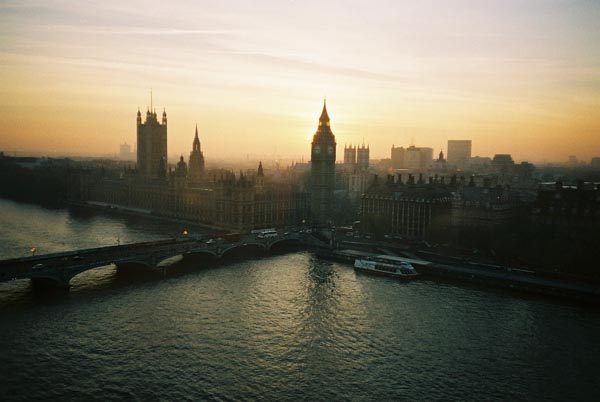
The Landscape/Cityscape category was the most popular of the four categories in the recent employee photography competition I mentioned in my last post. Here is the WINNER. My UK readers will particularly enjoy this one!

Westminster at Sunset, by Emma Rossiter


Sunday, October 08, 2006

Sunday: Itchenor

Before diving into my Itchenor post, let me apologize for how long it has taken me to blog my way through London. A 9-day trip has lasted nearly 11 weeks! I guess you might say I got carried away. You would also be correct in assuming that everyday life distracted me many times. Anyway, this posts concludes my London series. Thanks for your patience with my snail's pace. Researching the posts, I learned as much afterwards as I did when I was there. And now, down to business!

The last full day of my London trip was spent in Itchenor, a coastal town on the Chichester Harbor in West Sussex. The name Itchenor is Saxon in origin: Icca was the name of the Saxon chief who resettled the area after the collapse of Roman Britain around 400 AD. Ora is a Saxon word which means "a bank on the shore." Over the years shipbuilding and sailing activity have played a prominent role in the life of this town. The connection to the sea is evident in the naming of the little Norman church, built in 1175 AD, which was dedicated to St. Nicholas, the patron saint of seamen.

The St. Nicholas Church with its adjoining cemetery was the first place Maurene and I stopped on our Sunday morning walk. The vicar and a woman who tends to the church were setting up for the service. They showed us around and generously gave us some postcards and a pamphlet of historical information about the chapel.


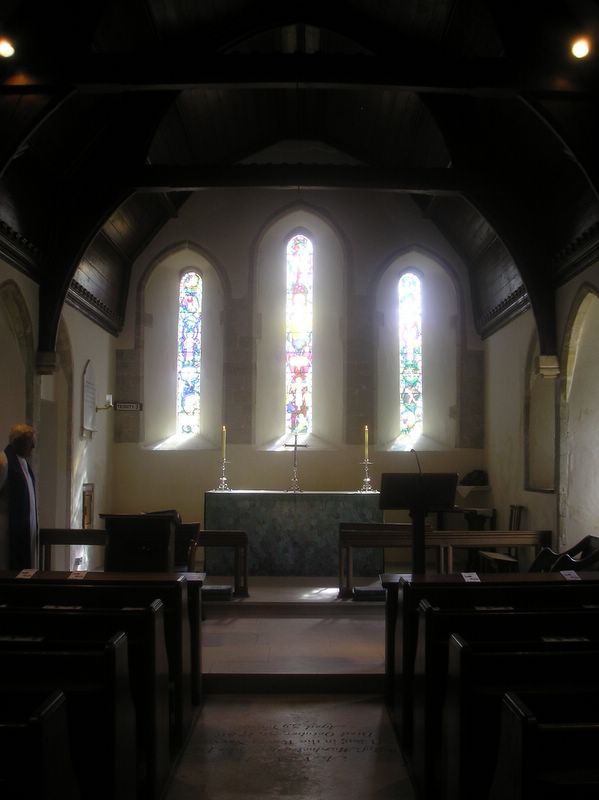
The church is quite small – a rectangular building 50 feet long and 16 feet 6 inches wide with no structural division between the nave (where the congregation sits) and the chancel (where the altar stands). Like most ancient buildings, the chapel has undergone many restorations and elements from many eras are visible. The oldest windows, pictured below, are from the 13th century. (Note the vicar, trying to disappear into the wall on the left there.)


The little chapel was very peaceful, lovely in its simplicity. I wish there had been time to stay for the service, but it was a beautiful day and we needed to keep to our schedule. As the St. Nicholas Church receded into the background, we communed with God and nature as we made our way down the road toward the Chichester Harbor.


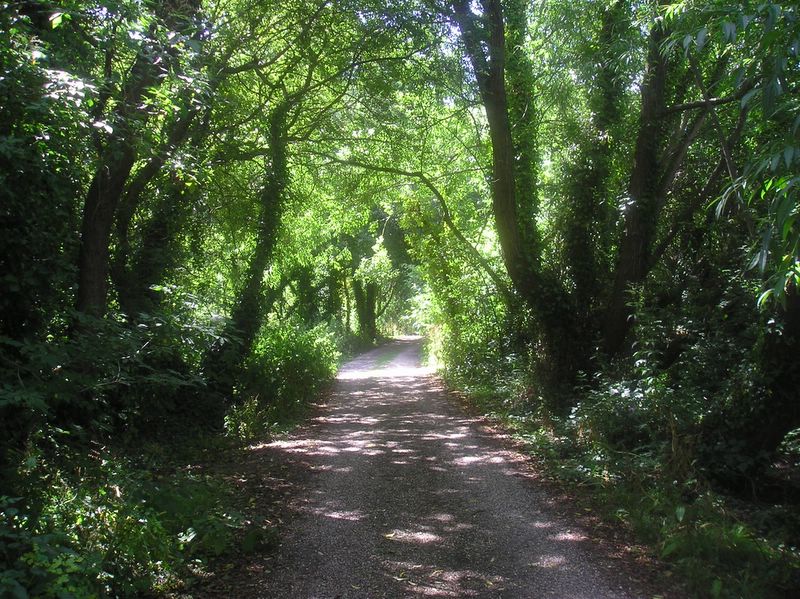
Maurene took a shortcut down this walled path…


which opened up onto the majestic harbor view!!


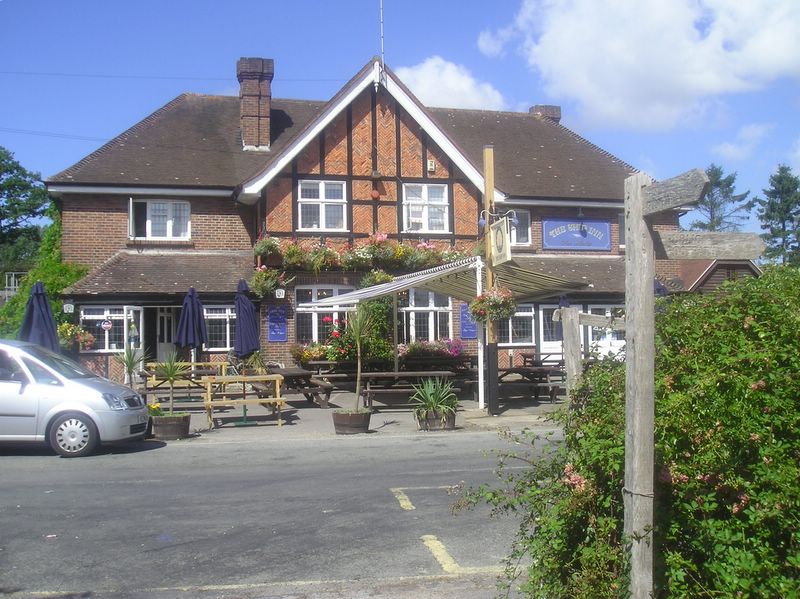
Just up from the marina sits the picturesque pub below, The Ship Inn. According to one internet site I read, it is the only pub in Itchenor.


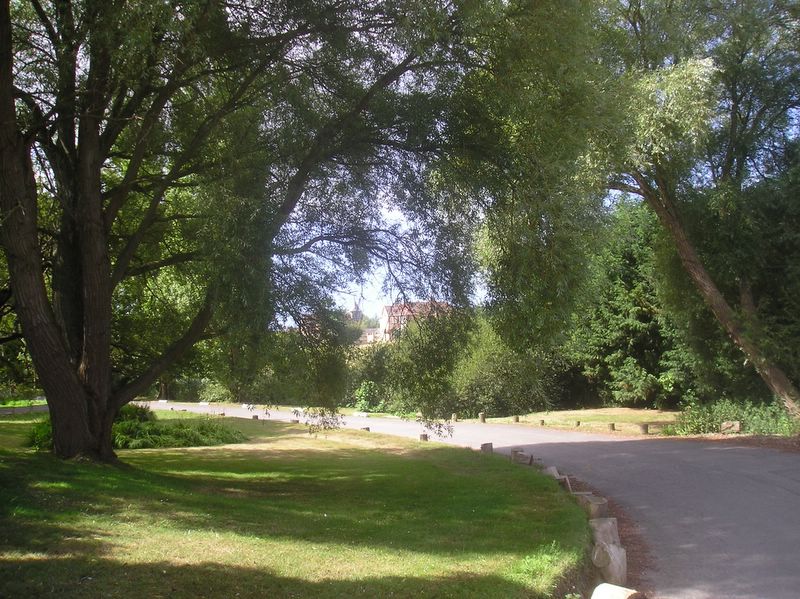
On our way back to our hostess’s house, we walked through a nature preserve.


Betty, our hostess, had a swimming pool, and after walking all morning Maurene and I were happy to join her for a dip in the pool. The mischievious Sindy did not join us.


Betty served us a nice lunch before we went back to the Chichester train station to catch the London train.

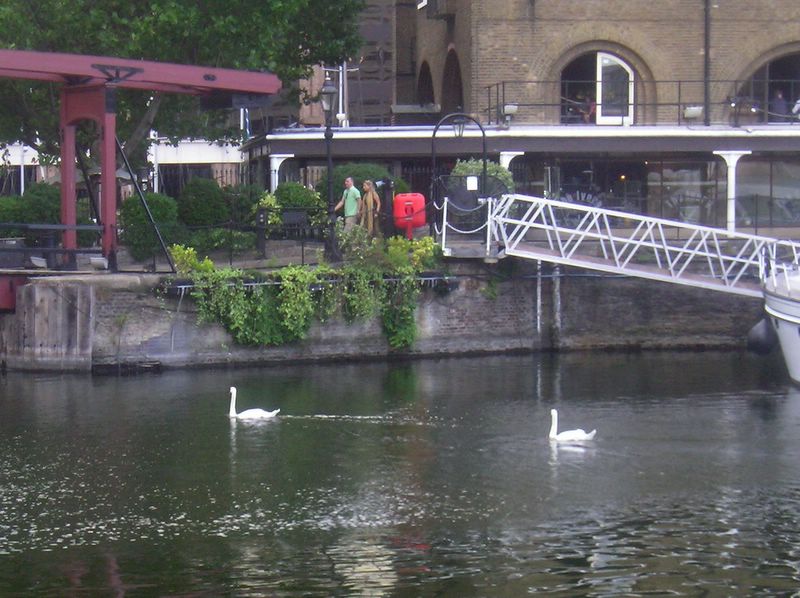
My last night was a nostalgic remembrance of the my first two nights in London. Maurene and I walked around the St. Katherine’s Dock area near the Dickens Inn and looked at the Queen’s swans.


Then we went to an Indian restaurant for dinner. I spent the night with Maurene and her Abyssinian cat named Peri.

The conclusion of my London blog series would not be complete without a special thank-you to Maurene. She waited patiently when I got lost on the tube and was late. She had cash on hand when my British currency ran out. (We settled up at the end of the week.) She gave good directions and suggestions and had boundless energy and enthusiasm. She suggested the weekend in Chichester. She was the perfect traveling companion. She made it possible for me to turn a business trip into a simultaneous vacation. So, thank you, Maurene. I hope someday we can have more travel adventures together – soon!

(P.S. All the photos in this post are mine.)

© 2006, Linda Mason Hood
Truffles, Turtles & Tunes Copyright Statement

Wednesday, September 20, 2006

Saturday, part II: Chichester Cathedral

The problem with descriptions of cathedrals is that writers assume readers understand not only the terminology designating the areas within the building but also the organizational role of the cathedral within the religious group. Descriptions loaded with special terms and insider jargon leave most of us with no better understanding than we had before we read them. Using myself as an example, I’ve attended Christian churches all my life -- even spent a good 20 years as an Episcopalian. I mention that because Episcopals have cathedrals, whereas Mennonites don’t. I have also visited and toured a fair number of cathedrals in various parts of the world. However, when reading about the Chichester Cathedral I found myself woefully unclear regarding many references and their implications. For this blog post, I made myself look up and clarify all my fuzzy understandings, and I’ve included definitions and explanations for all the terms I found necessary and meaningful to use here. I hope this helps you as much as it has helped me!

To appreciate the early history of the Chichester Cathedral, you need to understand that a cathedral is more than just a great big church. A cathedral is the bishop’s church and, as my son would once have said, the bishop is the boss of all the churches of the region (i.e., diocese) and their respective priests. Note the hierarchy: priests run churches; bishops run cathedrals. The town in which the cathedral is located is called the see, meaning the official seat or center of authority of a bishop. Considering all that, it's easy to see why the cathedral is usually the biggest and grandest church of the diocese. This page on the organization of the Chichester Diocese explains very clearly the main “players” and their roles.

I read that the Chichester Cathedral’s history actually began in the village of Selsey, ten miles south of Chichester, on land given to Saint Wilfred in 681 AD. In 1066 AD the whole area was conquered by the Normans led by William the Conqueror. In 1075 the Normans moved the see to Chichester and began construction on a new cathedral in 1076. Histories of the Chichester Cathedral include references to its predecessor in Selsey because even though the Chichester building itself wasn’t begun until 1076, the functions served by that building remained the same as the functions of the Selsey building dating back to 681. In fact, there have been 101 bishops to rule over this particular diocese which extends throughout what is now defined as East and West Sussex, and only 76 of them have presided from the Chichester Cathedral. The point I’m making here is that this is obviously a very old building, but its history is even older.

Let’s turn our attention now to the building itself and the terms used to describe it. These terms are not words found in most people’s everyday vocabulary. Often a picture is the best explanation, so I scanned the floor plan found in a pamphlet I bought in the Cathedral bookstore, Chichester Cathedral Pitkin Guide. North is at the top, but the front of a cathedral generally faces East. Knowing that, the descriptions will be easier to follow.


The initial period of construction from 1076 through 1123 was responsible for the nave (central portion where people congregate), the transepts (the portion of the building that forms a cross with the nave and provides additional seats which face the center), and the quire (the center section where the choir sits and where the organ is located). The presbytery (area to the east of the quire) contains the altar.

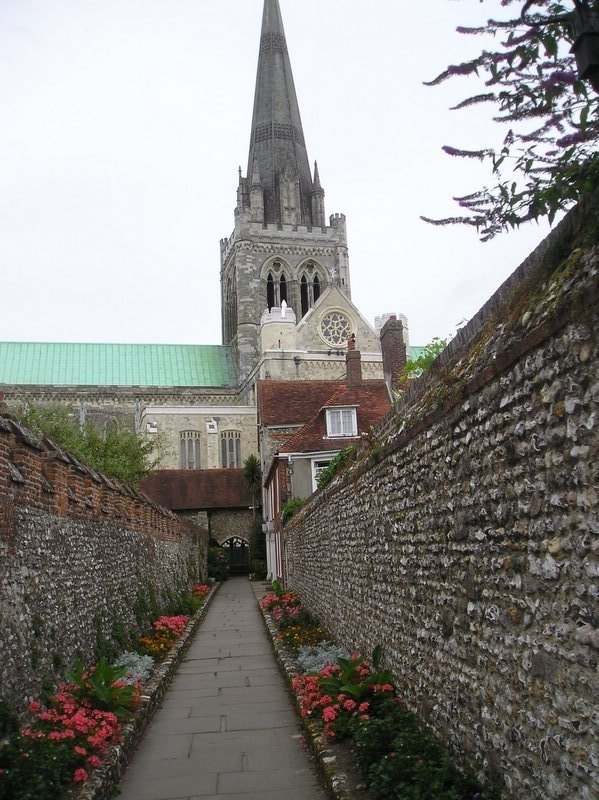
Actually, various parts of the cathedral were completed at different times over the years. The floor plan outlines the original early 12th century section in purple, later 12th and 13th century additions in red and green, and 14th through 16th century additions in pink and orange. My picture of St. Richard’s Walk below, taken from the south side of the Cathedral, captures construction from several of these periods. You can see the 13th century walls which lead to the 12th century building whose spire was rebuilt in the 19th century.


The marvelous arched ceiling inside the Cathedral was truly beautiful. I took this picture standing at the front of the nave looking back toward the main entrance.


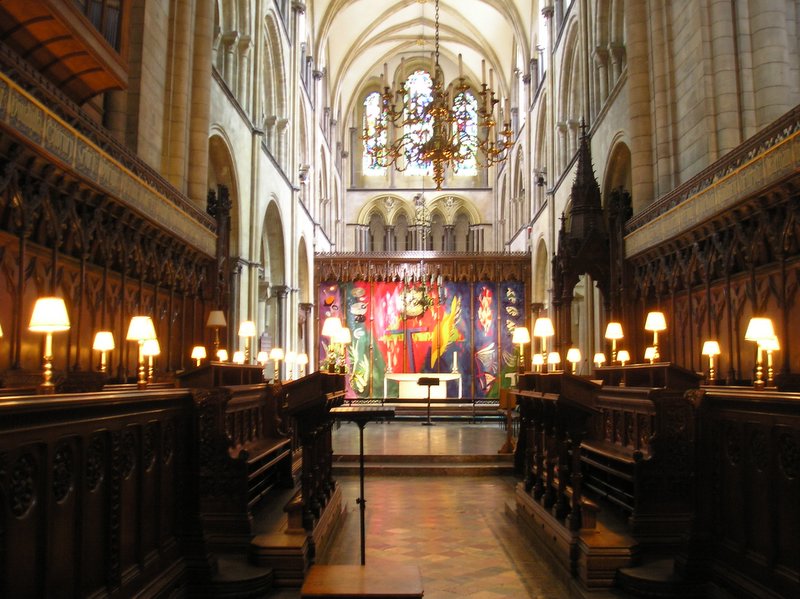
Turning around, I faced the quire and the presbytery behind it. You can see the stalls in the quire as well as the altar decorations in the presbytery. In small weekday services both the choir and the congregants sit in the stalls in the quire.


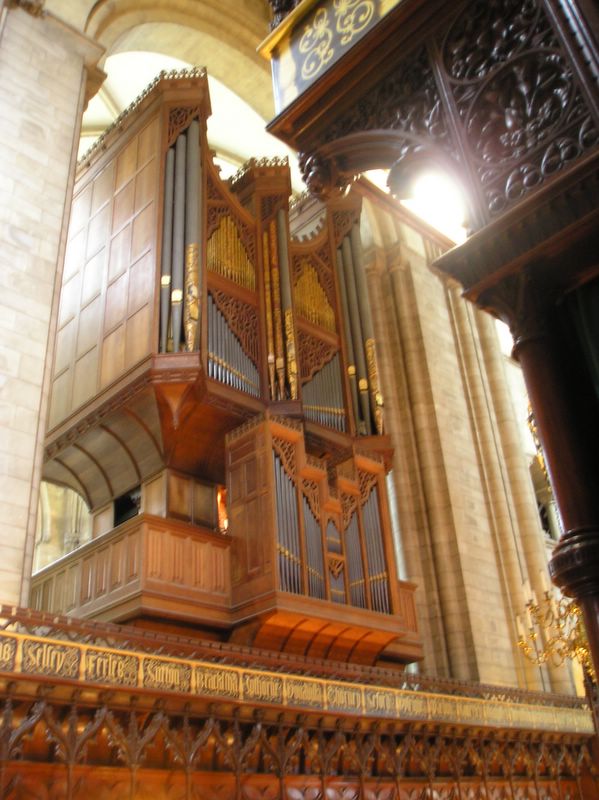
Above the quire stalls are the painted Renatus Harris organ pipes dating back to 1678, reports the Pitkin Guide. They were restored in 1986 after a silence of 13 years. I can tell you with certainty that their sound is as beautiful as their housing. Maurene and I sat beneath them in the quire stalls at the Choral Evensong service on the day of our visit.


And here’s a close-up of the white marble altar by Robert Potter and the tapestry by John Piper (1966) which hangs on the screen behind the altar in the presbytery.


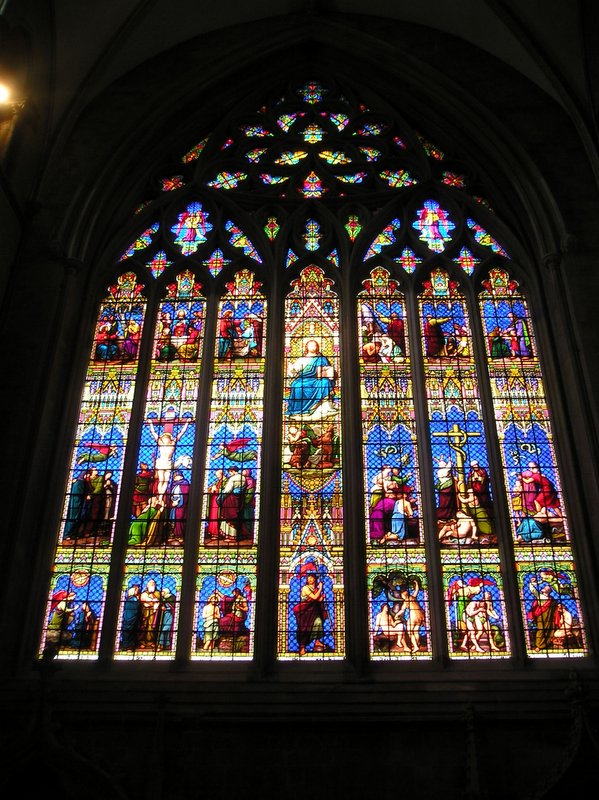
There’s not much ancient stained glass left in the Chichester Cathedral. Most of it comes from the 19th century. This window, located in the south transept, was designed by C. Parrish and made in 1877.


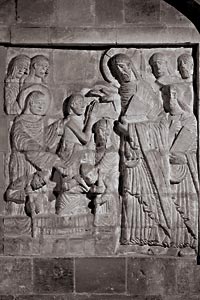
In the south quire aisle are two medieval sculptured stone panels dating back to 1125 AD. (This photograph was borrowed from the Chichester Cathedral website.)


Not far away a section of Roman tiled floor panels from the 2nd century can be seen beneath a plexiglass plate in the floor. These tiles were from the Roman city of Noviomagus, the predecessor of Chichester.


Going around in back of the presbytery and into the retroquire (area behind the presbytery, separated from it by the screen bearing the Piper tapestry above), we entered the Chapel of St. Mary Magdalene with its very modern décor. The striking 1960 painting below by Graham Sutherland entitled “Touch me not” dominates the area.


After looking around this chapel, Maurene and I lit a candle and took a seat to gaze at the painting for a while. An announcement, repeated periodically, reminded us that although the Cathedral housed many significant works of art, its purpose was primarily that of worship. Visitors were encouraged to pause in their explorations of the cathedral and meditate. A timely and appropriate message, since that’s exactly what we were doing!

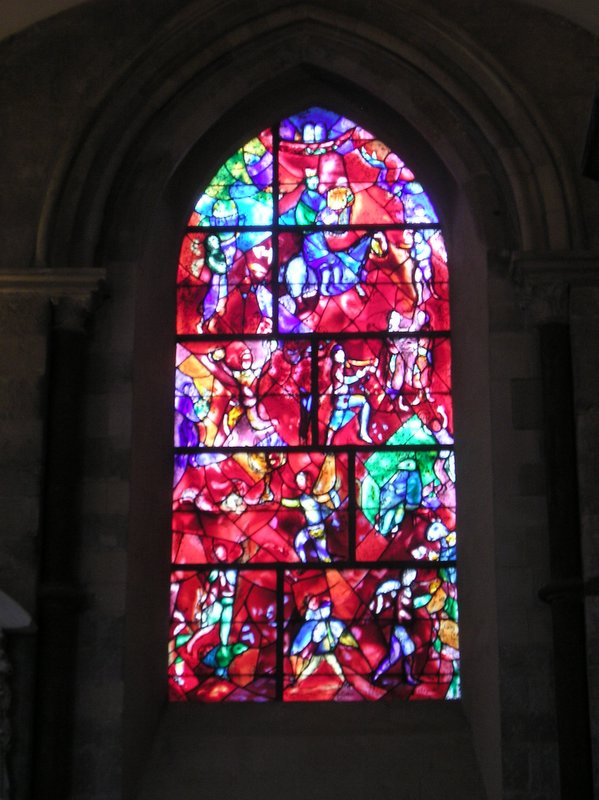
Also in the Chapel of St. Mary Magdalene is the small but stunning stained glass window designed in 1978 by Marc Chagall.


The 12th century chapel on the east side of the north transept contain the Treasury, a small museum of interesting artifacts. I read in the Pitkin Guide that “the Worshipful Company of Goldsmiths gave generous financial assistance to enable the cathedral to house and display securely its own treasures as well as plates from churches in the diocese.” Maurene and I enjoyed examining the medieval chalices and plates, bishops’ rings and the heads from bishops’ staffs, as well as some impressive medieval wooden chests.

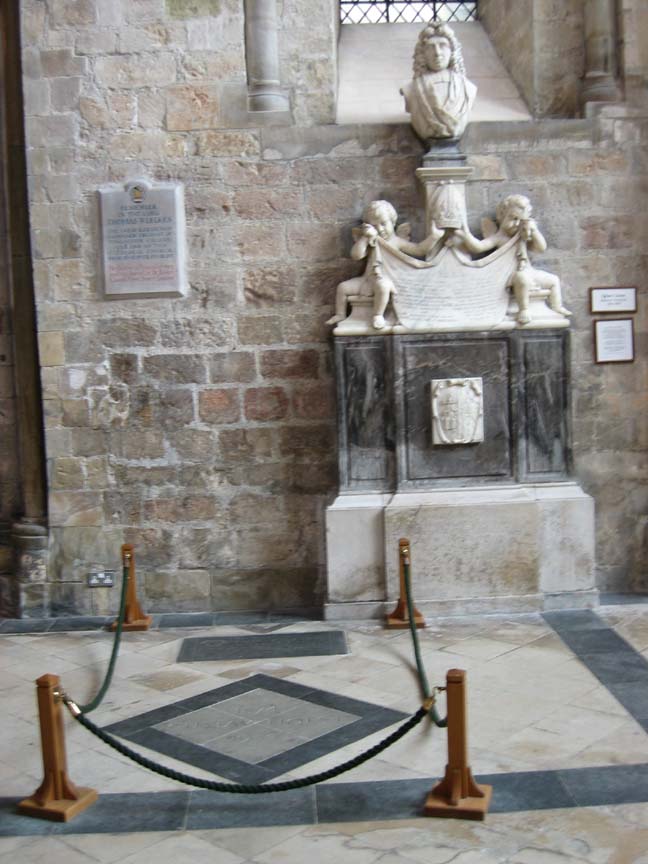
Chichester Cathedral has a strong musical heritage. Leonard Bernstein composed the Chichester Psalms in 1965 for the Cathedral. Gustav Holst also had connections to the Cathedral and is buried there. His ashes are entombed under the diamond-shaped plate in the floor in the picture below. Since I played quite a lot of Holst's music in high school, I can't believe I somehow forgot to take a picture of his tomb! But here's the one I found on the website I linked to his name.


Completing our tour of the Cathedral itself, Maurene and I purchased some gifts and souvenirs in the Cathedral Gift Shop before adjourning to the Cathedral Snack Bar for a "cream tea.” Maurene explained to me that a cream tea consists of scones served with (specifically) strawberry jam and clotted cream. The scones were not the dry, hard things I’ve had in NYC. They were fresh and moist. The strawberry jam was densely strawberry in flavor. Despite its name, the clotted cream was not disgusting and did not have hard lumps in it like cottage cheese. It was a heavily whipped cream which was not as sweet as we make it in the US – a perfect compliment to the jam. The whole concoction can only be described as “to die for.” I most definitely thought I had gone straight to heaven with the first bite!

After tea we wandered through some of the town's tourist shops. I was sorry to discover that there was nothing as tacky as a shot glass to be found in the classy little village of Chichester. My shot glass collection would just have to make room for a small china thimble bearing a handpainted depiction of the Cathedral. That was as close as I could come.

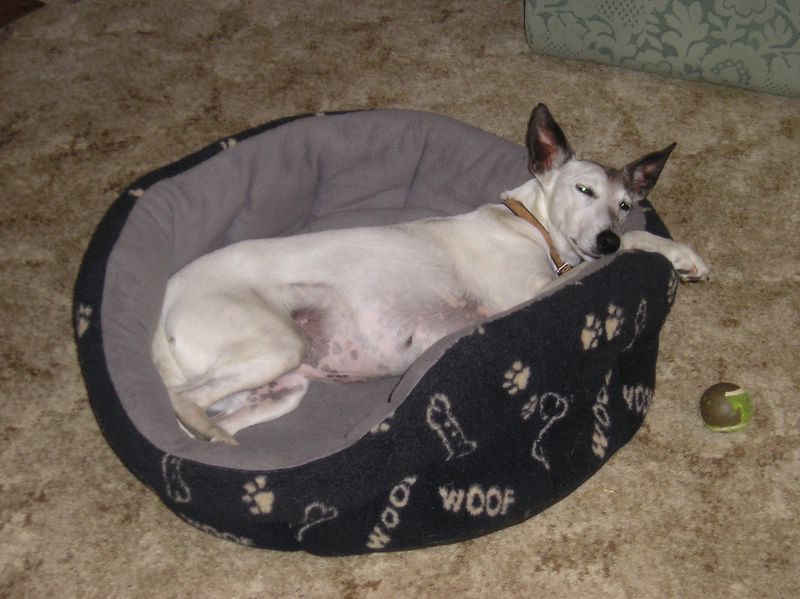
At around 6:30 pm John, Betty’s driver, took us out to Betty’s house in Itchenor, a village on the Chichester Harbor about 20 minutes drive from the walled city of Chichester. After a walk around Betty’s extensive garden which includes an orchard and a grape arbor as well as flower beds and large fruit and vegetable patches, we enjoyed an informal cold supper with Betty and Sindy, her mischievious shelter rescue dog. Betty theorizes that Sindy’s clever food heists are signs of an earlier life deprived of adequate food. Whatever the reason, Sindy demonstrated her stealth and daring by stealing Betty’s prawns and some crisps (potato chips) when she thought nobody was looking! And here is our Sindy, enjoying a lie-down with a stomach full of prawns. I dare say Maurene and I probably looked just as content when we climbed into our beds that night after good company, good food, and after a jam-packed day (no pun intended) of touring in Chichester.


(P.S. All the pictures in this post are mine, except where otherwise noted.)


Monday, September 04, 2006

Saturday, part 1: Chichester Walls and Chichester Cross

Saturday, at last! With the work week behind me, I was excited about spending 100% of my time over the next two days vacationing with Maurene in West Sussex. I had never visited any part of the British countryside, so this would be a new adventure. Also, I hoped the weather by shore would be a little cooler than what we'd endured in London during the past week.

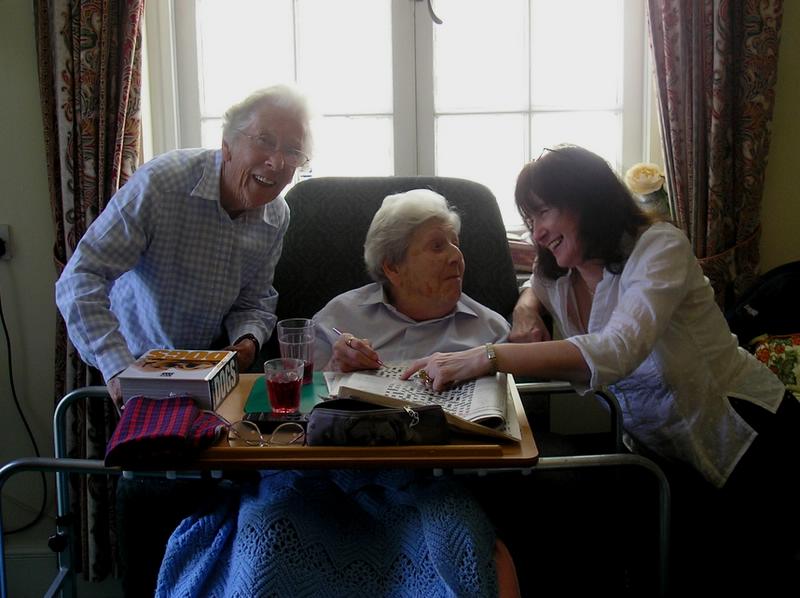
Maurene and I were to stay overnight with her 90-year-old friend Betty, who met us at the train station in Chichester. We were driven to the nursing home where Betty’s 95-year-old sister Nancy lives. After a short but very pleasant visit, Maurene and I set off to find lunch and fortify ourselves for a day of sightseeing in Chichester.


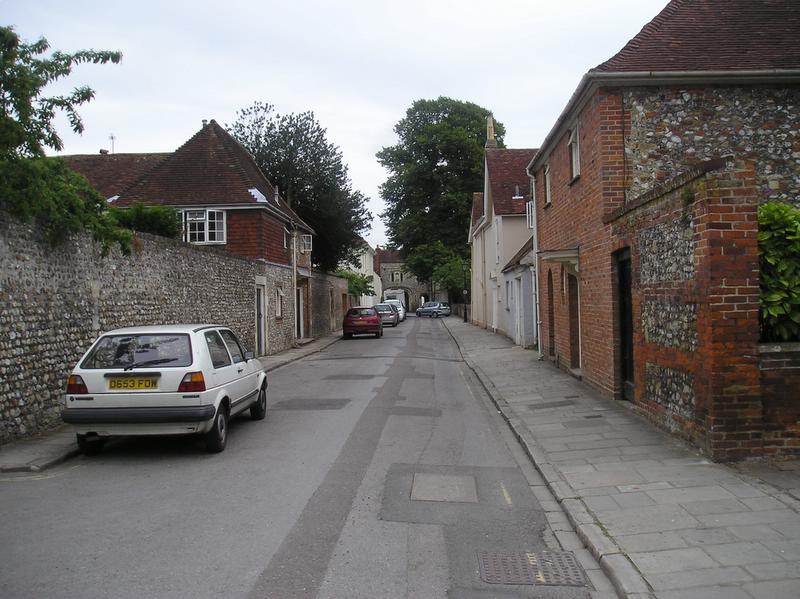
Driving into Chichester, our view of the city walls was the first evidence of its long history. The ancient city of Chichester was laid out in Roman times, possibly as early as the end of the second century. In 1204 AD repairs to the Roman wall were undertaken, with additional work performed in 1261 and in the 1370s. The medieval construction used “knapped flint.” Flint is apparently the local stone, and knapping was probably a rather manual process which involved cracking open the flint rock to expose the beautiful coloration inside. Standing in the middle of Canon Lane, which is just off South Street near the entrance to the cathedral close, I took this picture of the old city walls.


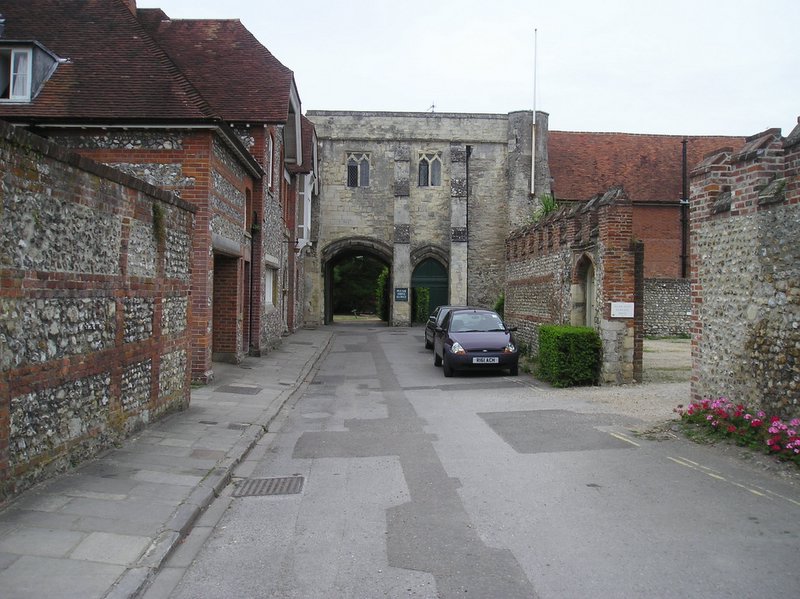
Turning around (still on Canon Lane), I saw the Canon Gate House which dates back to the 13th century.


This picture gives a closeup view of the surface of the walls. You can see not only the knapped flint but a spot where recent brick repair has been applied.


Maurene and I didn’t walk the perimeter of the walls (1.5 miles or 2.4 kilometers), but the internet provides a nice virtual walk which I highly recommend.

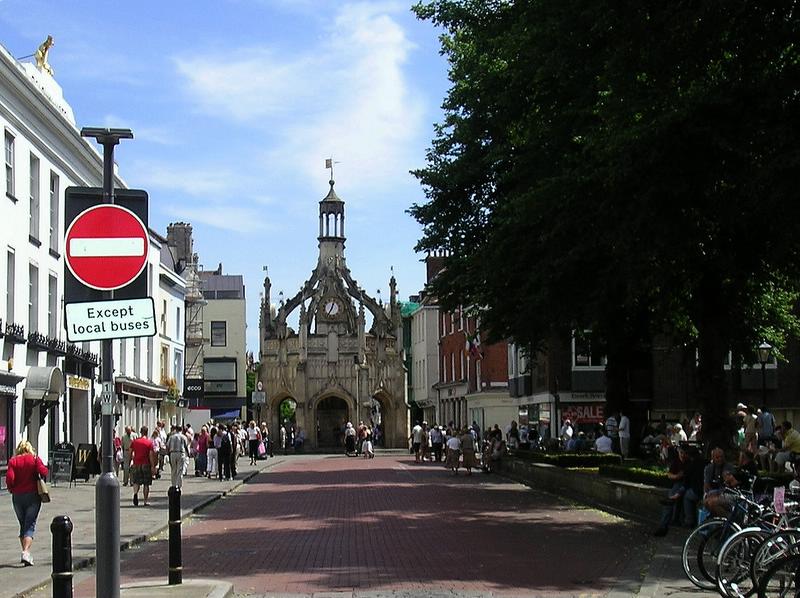
Chichester’s four main streets – simply named North, South, East, and West streets – all radiate out from a central “cross,” a structure given to the town in 1501 by the Bishop Storey to shelter farmers who sold produce in the city. Here’s my picture of the Chichester Cross.


In Roman times there was no Cross, of course, but these same four streets extended from the center of town in all four directions: North to London, East to Winchester and Silchester, South to the sea, and West to Fishbourne, which was the Roman supply base on Chichester Harbor.

What makes Chichester interesting, however, is not only the landmarks of Roman and medieval times but evidences of all the other eras in between. It has had a vibrant, continuous history with a consistently rich cultural heritage. In addition to being the center of the diocese and providing religious leadership to the region, Chichester has also offered music, theater, art, museums, libraries, societies for intellectual improvement (such as the 19th century Literary and Philosophical Society), and community dances. Personally, I think the Chichester Cross is a symbol of all that. This beautiful landmark, which is neither Roman nor medieval, stands in the center of town and symbolizes how artistic contributions of all the periods have added to the culture and beauty of the little town of Chichester. 


(P.S. All the photos in this post are mine.)

© 2006, Linda Mason Hood
Truffles, Turtles & Tunes Copyright Statement

Sunday, August 27, 2006

Friday: Pimms No. 1 and The London Symphony Orchestra


The picture above shows the view of Canary Wharf just outside the office, a popular gathering place with many lively pubs and restaurants. After work on Friday I was invited to join my London colleagues for an end-of-the-week beer at a pub called The Slug and Lettuce, just out of view on the right side of the picture, behind the trees. After socializing over a pint of Guinness, I went back up to the office to make a few phone calls to my New York colleagues who were all still hard at work due to the time difference. I finally called it a day around 8:40 pm (as you can see by the clocks in the picture).

I discovered the London Symphony Orchestra was doing an outdoor concert in Canada Square Park, just behind me as I snapped that picture. The concert was half over by this time, but I wandered over anyway. Even though I was tired, I couldn't resist hearing just a few pieces.

Intermission was in progress so I decided to get something to drink before the music started. The makeshift outdoor beverage stand offered only two (alcoholic) choices: Budweiser and Pimms. Well, I had not come all the way to London to order a Bud, so I ordered the Pimms. I thought it curious that the bartender put ice and fruit in the glass before she filled it from the tap. It looked like beer, but was it? The taste was... well... not at all like beer. Almost sweet. And one of the pieces of fruit was actually a cucumber! I drank a pint of the stuff and never did figure out what it was! Thanks to the internet, I can now tell you that Pimms No. 1, as it’s called, is a gin-based drink which consists of a slice of orange, lemon, apple, cucumber, and a sprig of mint -- all placed in a glass of two parts lemonade to one part Pimms. Apparently it’s as British as tea and is only drunk in the summer.

Canada Park was crowded, but I found a little place on the edge of the grass (on a curb, actually) where I could see the conductor on one of the big screens as well as the bandshell through the trees to my right. The "picturesque" crane in the background served as a reminder that Canary Wharf in the Docklands was an industrial area before it became London's ultra-modern version of Wall Street.


As soon as I settled in with my Pimms, the second half of the concert began. As if just for me, the London Symphony was performing a program of American music.


Now Bernstein, Barber, Gershwin, and Copeland are all serious American composers, and Richard Rodgers always makes good summer fare. But John Phillip Sousa??? What was he doing with that lot? But never mind. Sousa was last on the bill, and I planned to leave before then. I'm not very fond of Sousa, probably because I played Sousa marches ad nauseum in my high school marching band.

The concert was lovely, and it was nice to sit out in the cool summer air. As the program progressed and the orchestra launched into the first Sousa march, I got up to leave. However, the audience reaction to the music stopped me. The British obviously found these marches much more exciting than I did. People were clapping in rhythm and cheering at the chirping piccolos. I decided to stay and observe the crowd. Then I began hearing the marches through their ears, so to speak. It was an amazing experience. By the end the crowd couldn't stop applauding. They gave the orchestra a huge standing ovation and were rewarded with an encore.

I left before the encore ended. I needed to get back to the hotel and pack. Maurene and I had a big weekend ahead. In retrospect, though, I must say that I have a whole new appreciation for Sousa marches. They will always make me remember the enthusiasm of that Canary Wharf audience and wish for a Pimms No. 1.

(P.S. All the photos in this post are mine.)

© 2006, Linda Mason Hood
Truffles, Turtles & Tunes Copyright Statement

Sunday, August 20, 2006

Thursday: Theatre Royal Haymarket

I had been waiting with great anticipation for Thursday night because Maurene and I were to see Dame Judi Dench in Noel Coward’s Hay Fever. I am a HUGE Judi Dench fan, and I was very excited about seeing one of her live performances.
The night started off on a more positive note than yesterday's tourist adventures. I was relieved that the package I left in the Beatles Store had been found, and better yet, that Maurene had retrieved it for me on her lunch hour. After work, we met at her office, pictured below, which is located in a beautiful area known for its Victorian architecture.

Photo by Maurene Miller


From there, we walked to the Theatre Royal Haymarket. Although it is one of the oldest theatres in London (built in 1720), it was renovated in the 1990’s and air conditioning was installed. Another good omen. We were both thankful that we wouldn’t have to sweat through a performance as hot as yesterday's Prom concert at the Royal Albert Hall.

Like last night, there was not quite enough time to eat so we settled for a nice glass of wine before the first act. After ordering our intermission refreshments and purchasing programs, we headed for our seats.

Here is perhaps a good time to note two distinct differences between conventions at cultural events in London and in NYC. The first difference is that snack bars allow you to place your order and pay in advance for intermission refreshments. While the first act is in progress, your order is set out on a counter in the snack bar area. At intermission, you simply look for your name card and start sipping and munching. Quite civilized, wouldn't you say? The second difference is that theatres and concert halls charge for programs. The programs are much nicer than the free ones we get here in NYC. The British programs contain many glossy photos on beautifully laid out pages with lovely artwork as well as extensive background notes. However, you have to pay. We paid 4 pounds per program at the Royal Albert Hall and 5 pounds each at the Hay Market Theatre. One pound sterling equaled $1.85 USD at the time of my visit, so those programs were not exactly cheap!

Getting back to the play, though, it was a jewel. Just BRILLIANT. It seemed to take Judi a little while to warm up her voice, but we can all forgive her that. She is 70, after all. She projected great energy throughout, and her comic timing is that of a consummate pro. It was a treat as well to see Peter Bowles (from the British comedy series To the Manor Born) who played opposite Judi Dench. Actually, the entire ensemble of eight actors were equally talented, which is what made the play such a delight to watch. I felt Noel Coward’s drama, set in 1925, held up well. (The Times review of April 22, 2006 agrees.) Being in London for the week intensified my awareness of the play's nuances as Noel Coward poked fun at the British upper class. However, the intrigue of family relationships holds the same fascination today for audences everywhere.

Afterwards, Maurene and I went across the street for a proper dinner in an Italian restaurant. The food was very good, and we were both in fine spirits. It is not often that one can experience such a wonderful performance of a well crafted piece of writing followed by good food and wine, all enjoyed with a friend you don’t see very often. Indeed, it was a very special night. Definitely the high point in my trip so far!


© 2006, Linda Mason Hood
Truffles, Turtles & Tunes Copyright Statement

Sunday, August 13, 2006

Wednesday: Beatles Store and Royal Albert Hall

Wednesday I left work at 5:30 pm and dashed across London on the Tube, from the Canary Wharf stop on the far east side to the Baker Street stop on the west side. I was determined to get to the Beatles Store before it closed at 6:30 pm. Remembering this store from our family trip to London in 2000, my son had requested a Beatles calendar and a Zippo lighter with a Beatles logo.


photo taken from the Beatles store website


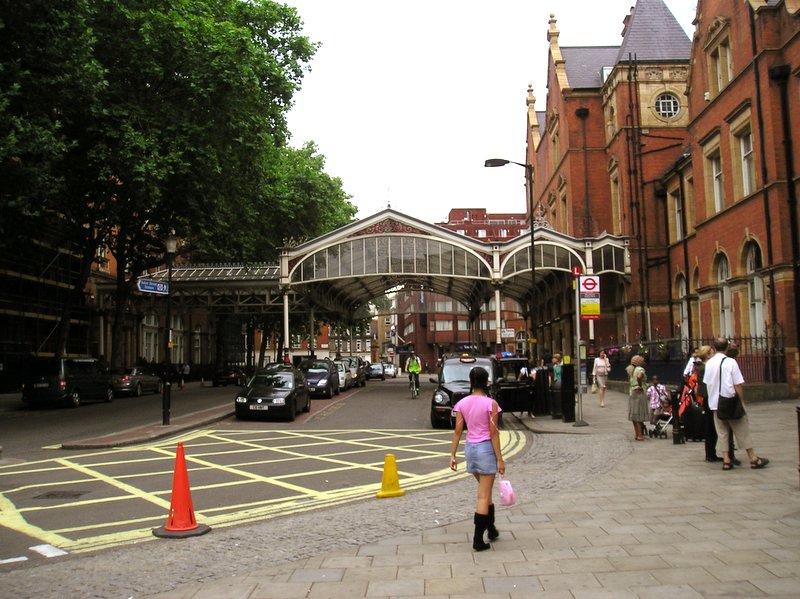
After making my purchases (I paid an outrageous USD $60 for the lighter), I took a walk around the neighborhood. The little B&B where we had stayed in 2000 still looked good, as did the pub where we ate several times. At the Marylebone Station (seen in the Beatles’ movie “A Hard Day’s Night”) I realized I had left the Zippo & calendar in the Beatles store. ARGH! I ran back, but it was locked up tight. Upset though I was, I had to put it out of my mind for the evening. I would call them in the morning.


Photo by Linda Mason Hood

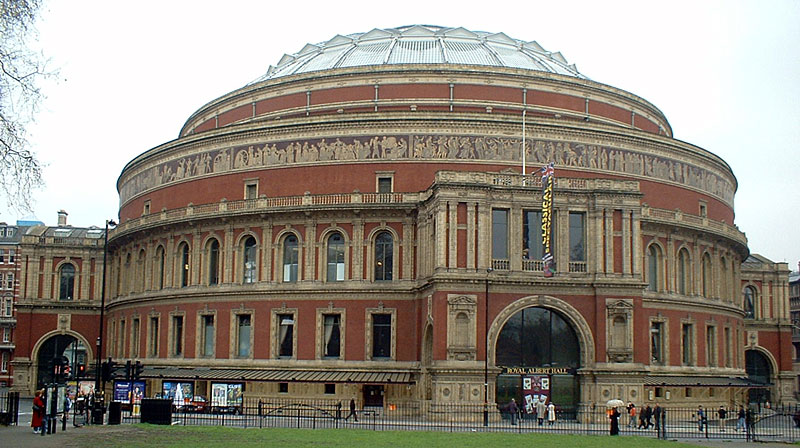
Next on the agenda: Royal Albert Hall. Before leaving NY, I had purchased tickets for Maurene and I to hear a concert in the annual summer Promenade series. Since we had no time for dinner, we went to the little snack bar inside the Hall. The couple before us got the last sandwich, so we made do with a glass of wine and a small container of ice cream each, plus a large cookie and a package of nuts which we shared.

Permission to copy granted under GNU Free Documentation License

It was REALLY hot in the Royal Albert Hall. We sat very still, but even so, the sweat poured off us as though we were under a shower. Nevertheless, the concert was brilliant. The program of Prom #17 was entitled The Great Venetians and included music of Gabrielli, Monteverdi, Grandi, Rigatti, and Cavalli. We heard the Monteverdi Choir and the English Baroque Soloists as well as an instrumental group called His Majesty’s Sagbutts and Cornetts, both conducted by Sir John Eliot Gardiner. This review from the Sunday Telegraph conveys the magic of the music we heard.


Photo by Linda Mason Hood

The concert, which didn’t start until 10:15 pm, ran past midnight. Rather than make a mad dash for the last train, Maurene and I opted for a cab. After the anxiety of the lost lighter, the lack of dinner, and the heat of the Hall, riding in that spacious black cab and seeing London's night-time sparkle was a real treat.

I arrived back at the hotel around 1 am and didn’t fall asleep for an hour. Still jet lagged, I guess, because 2 am is only 9 pm in York. I went to bed with a cup of peppermint tea and a biscuit and read a bit more of the program notes. It seemed the perfect way to wind down from my Wednesday night after-work adventure.


© 2006, Linda Mason Hood
Truffles, Turtles & Tunes Copyright Statement